Espostoa lanata cactus Features
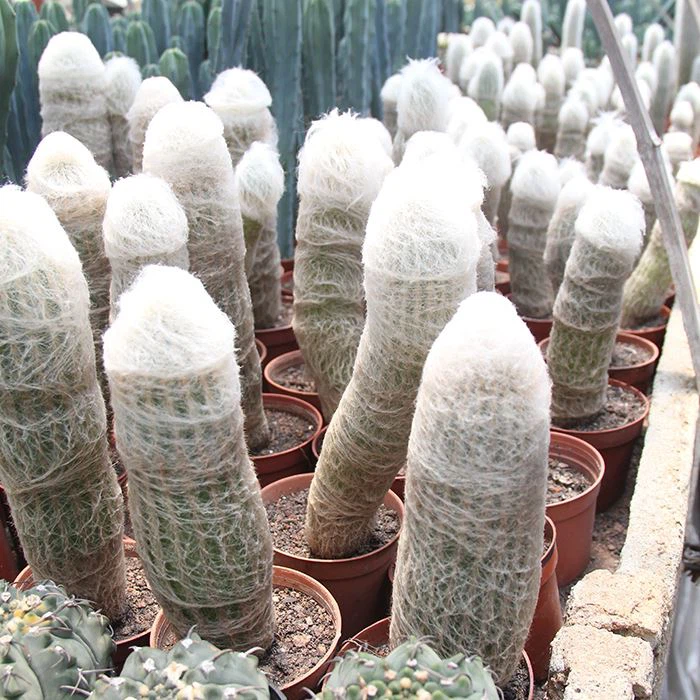
Appearance: Espostoa lanata has a tall, cylindrical shape that can grow up to 5 meters (16 feet) in height in its natural habitat. In cultivation, it typically remains shorter but retains its distinct form.
Woolly Coating: One of the most distinguishing features of this cactus is the dense layer of white, wool-like hairs that cover its surface. These hairs give it the "Old Man" nickname and help protect it from the intense sunlight and cold in its native high-altitude environment.
Spines: Beneath the woolly layer, Espostoa lanata has sharp, yellow to brown spines, which can be up to 5 cm (2 inches) long, making it a well-defended plant.
Flowers: This cactus produces nocturnal, white to pinkish flowers, which usually appear near the top of the plant. The flowers are funnel-shaped and bloom during the summer. However, it rarely flowers in cultivation.
Fruits: The flowers are followed by small, edible, spherical fruits that are pink to red in color.
Espostoa lanata cactus Size:
- Potted in a 12cm pot
-
The height of the plants and the flower pots can be made to your size.
Espostoa lanata cactus Special Care or Planting instructions
- Light
Espostoa lanata thrives in full sun to partial shade. It requires plenty of sunlight to maintain its woolly appearance and promote healthy growth.
- Water
Water sparingly and allow the soil to dry out completely between waterings. Overwatering can lead to root rot, which is a common problem with this species. Reduce watering in winter when the plant is dormant.
- Soil
It prefers well-draining, sandy or gritty soil, much like other cacti. A cactus potting mix with added sand or perlite works well in cultivation.
- Temperature
While it can tolerate some cold, it is not frost-hardy. It should be kept above 5°C (41°F) in the winter, making it ideal for indoor or greenhouse cultivation in cooler climates.
- Ornamental
Due to its distinctive woolly appearance, Espostoa lanata is a popular ornamental plant in cacti collections, rock gardens, and arid landscapes. Its "furry" look contrasts beautifully with other cacti and succulents.
- Edible Fruits
The small fruits are edible, though they are not commonly consumed outside its native range.
- Indoor Cultivation
It can also be grown indoors, provided it receives enough sunlight, making it a good choice for cactus enthusiasts with limited outdoor space.
Hot Tags: espostoa lanata cactus, China espostoa lanata cactus, Lobivia Or Echinopsis Flambeau Cristata, Sansevieria Trifasciata Whitney Plant, Mammillaria Bombycina Cactus, Guzmania Allura Flowering Plant, Dieffenbachia Tropic Jewel Plant, sago palm plant