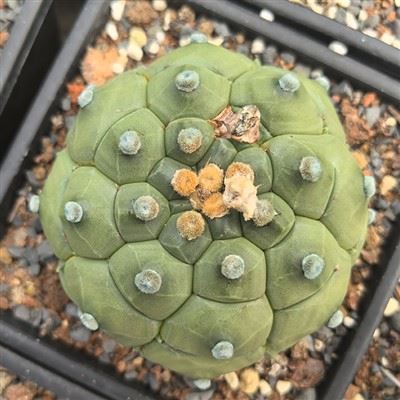
Eriosyce taltalensis subsp. pilispina cactus Features
Size: Eriosyce taltalensis subsp. pilispina is a small, globular cactus that typically grows to around 2–4 inches (5–10 cm) in diameter. It remains solitary or forms small clumps over time.
Stem: The stem is usually dark green to grayish-green and spherical or slightly flattened in shape. It has prominent ribs that are divided into tubercles. The overall surface of the plant is textured due to these tubercles.
Spines: The spines are one of the most striking features of this cactus. They are thin, flexible, and hair-like, giving the plant a delicate and elegant appearance. The color of the spines can range from whitish to reddish-brown, and they often form a dense, protective covering over the stem. The spines help protect the plant from harsh sunlight and herbivores, as well as minimize water loss by shading the surface of the plant.
Flowers: The flowers of *Eriosyce taltalensis subsp. pilispina* are typically pink or purple, though they can also be lighter in color, sometimes even white. The flowers are funnel-shaped, relatively small, and usually appear at the top of the plant during the growing season, which is usually in spring or early summer. They are followed by small, fleshy fruits that contain seeds.
Eriosyce taltalensis subsp. pilispina cactus Size:
- Potted in a 8-18 cm pot
-
The height of the plants and the flower pots can be made to your size.
Eriosyce taltalensis subsp. pilispina cactus Special Care or Planting instructions
- Light
Eriosyce taltalensis subsp. pilispina requires plenty of sunlight to thrive, making it ideal for bright, sunny locations. In cultivation, it does well in full sun to partial shade. If grown indoors, a bright windowsill or a greenhouse is recommended to ensure it gets enough light.
- Water
During the growing season (spring and summer), water the plant sparingly, allowing the soil to dry out completely between waterings. In winter, when the plant enters dormancy, reduce watering significantly or stop altogether. Overwatering is one of the most common issues with this species, and care must be taken to avoid it.
- Soil
Like many desert cacti, this plant requires well-draining soil. A cactus mix with added sand, pumice, or gravel to improve drainage works best. It should never be left in waterlogged conditions, as this can quickly lead to root rot.
- Temperature
This cactus is well-adapted to hot, dry conditions and can tolerate temperatures well above 100°F (38°C). It is, however, not frost-tolerant, so in cooler climates, it should be brought indoors or protected from freezing temperatures in winter.
- Propagation
Eriosyce taltalensis subsp. pilispina is usually propagated from seed, as it rarely produces offsets. Seeds can be sown in a well-draining cactus mix and kept in a warm, bright location. Germination may take some time, but once established, the plants are relatively hardy.
- Spines
The hair-like spines of this subspecies are particularly fragile, so handling the plant should be done with care to avoid damaging them. While the spines provide protection, they are more delicate than those of other cactus species.
- Flowering
To encourage flowering, ensure that the cactus receives plenty of light and follows a proper watering schedule. The flowers are small but beautiful, making them a highlight for collectors.
- Pests and Diseases
Like most cacti, Eriosyce taltalensis subsp. pilispina can be susceptible to pests such as mealybugs and spider mites. Fungal infections can also occur if the plant is kept in overly humid or damp conditions. Regular inspection and proper care can help prevent these issues.
Hot Tags: eriosyce taltalensis subsp. pilispina, China eriosyce taltalensis subsp. pilispina, cacti that are young, cacti that are native to coastal areas, cacti that are native to the desert, cacti terrarium, cacti in corners, cacti for living room