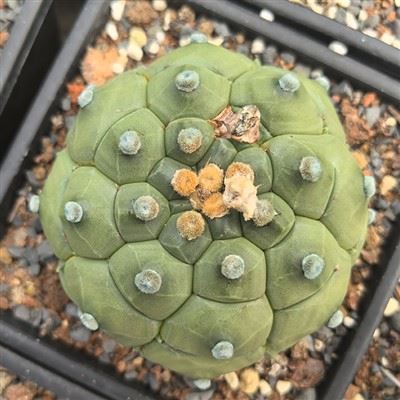
Echinopsis sanguiniflora cactus Features
Size: This cactus is relatively small, growing up to about 4–6 inches (10–15 cm) in diameter. It generally forms a solitary globular stem, though it may eventually form small clumps as it matures.
Stem: The stem is a deep green to blue-green color, with a round, ribbed structure. It usually has 10–15 ribs, and each rib is divided into distinct tubercles. The cactus has a firm, fleshy texture typical of species in the *Echinopsis* genus.
Spines: The areoles on the ribs produce clusters of spines, usually 5–10 spines per areole. The spines are thin, straight, and can vary in color from yellow to brown. They are relatively short compared to some other cactus species, and while they offer protection, they are not as prominent or aggressive as in other *Echinopsis* species.
Flowers: The standout feature of *Echinopsis sanguiniflora* is its large, showy red flowers, which can be up to 4 inches (10 cm) in diameter. The flowers are funnel-shaped and appear near the top of the plant, typically blooming in the spring and summer. The vivid red color is striking, making this species a favorite among cactus enthusiasts. The flowers open in the evening and can last for a couple of days.
Echinopsis sanguiniflora cactus Size:
- Potted in a 6-15 cm pot
-
The height of the plants and the flower pots can be made to your size.
Echinopsis sanguiniflora cactus Special Care or Planting instructions
- Light
This species requires bright light, including direct sunlight, to thrive. In cultivation, it should be placed in a location where it can receive full sun for several hours a day. If grown indoors, a sunny windowsill or greenhouse is ideal. Lack of sufficient sunlight can lead to etiolation, where the plant stretches out and becomes weak.
- Water
During the growing season (spring and summer), water the plant thoroughly but allow the soil to dry out completely between waterings. This species, like many cacti, is highly drought-tolerant and should never be left sitting in water. In winter, when the plant enters dormancy, reduce watering significantly or stop altogether, depending on the conditions.
- Soil
Like most cacti, *Echinopsis sanguiniflora* prefers well-draining soil. A standard cactus mix with added sand, pumice, or perlite for better aeration and drainage works well. Good drainage is crucial to prevent root rot.
- Temperature
Echinopsis sanguiniflora* is well-adapted to warm temperatures and can tolerate heat, but it should be protected from frost. In regions with cold winters, it should be brought indoors or placed in a greenhouse where temperatures remain above 50°F (10°C).
- Propagation
The cactus can be propagated from seed, although this is a slow process. More commonly, it can produce offsets (pups) that can be separated and replanted. The pups should be allowed to callous for a few days before being placed in soil to prevent rot.
- Flowering
The red flowers of *Echinopsis sanguiniflora* are one of its most attractive features, and proper care can encourage regular blooming. Ensure the plant receives enough sunlight, follows a consistent watering schedule, and is kept in well-draining soil to promote healthy growth and flowering.
- Pests and Diseases
This cactus can be susceptible to common pests like mealybugs, aphids, and spider mites. Regular inspection and the use of appropriate insecticides (such as neem oil or insecticidal soap) can help keep these pests at bay. Root rot is another concern if the plant is overwatered or kept in poorly draining soil.
Hot Tags: echinopsis sanguiniflora cactus, China echinopsis sanguiniflora cactus, cacti pruning, cacti that are native to south america, columnar cacti, cacti in containers, cacti that are growing fast, cacti that are hard to kill