

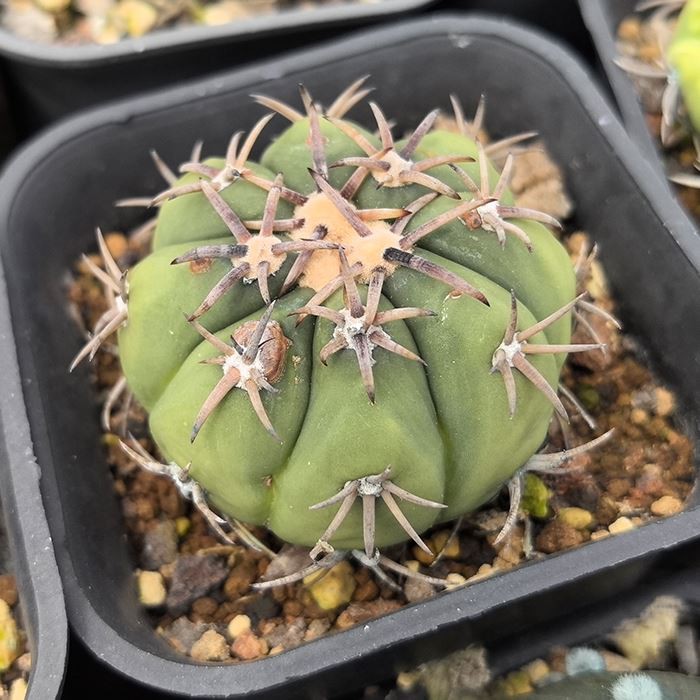

Echinocactus horizonthalonius cactus Features
Size: Echinocactus horizonthalonius grows as a solitary, globular cactus. It usually reaches about 4–8 inches (10–20 cm) in diameter, though older specimens can grow slightly larger. Its flattened, spherical body makes it a striking addition to cactus collections.
Stem: The stem is typically a blue-green to grayish-green color and is divided into 8 to 10 ribs, which are spirally arranged. Each rib is deeply grooved and has prominent tubercles. The cactus has a distinctive, almost fuzzy texture due to the woolly areoles from which the spines grow.
Spines: The spines are stout, recurved, and resemble claws. They are often reddish or pinkish when young, turning gray or tan as they age. There are usually 5 to 8 spines per areole, and the central spine is the largest and most curved. These spines provide protection from herbivores and also help shade the plant from intense sunlight.
Flowers: Echinocactus horizonthalonius produces large, bright pink or magenta flowers that can grow up to 2–3 inches (5–7 cm) in diameter. The flowers typically bloom in late spring to early summer and are funnel-shaped. They arise from the top of the plant and are followed by small, fleshy, greenish fruits.
Echinocactus horizonthalonius cactus Size:
- Potted in a 8-18 cm pot
-
The height of the plants and the flower pots can be made to your size.
Echinocactus horizonthalonius cactus Special Care or Planting instructions
- Light
Echinocactus horizonthalonius thrives in full sun and should receive at least 6 hours of direct sunlight per day. In cultivation, ensure the plant is placed in a bright, sunny location, such as a greenhouse or a south-facing window. If grown outdoors, it can tolerate intense desert sun, but younger plants might need some light shade during the hottest part of the day.
- Water
Echinocactus horizonthalonius is highly drought-tolerant. During the growing season (spring and summer), water the plant sparingly, allowing the soil to dry out completely between waterings. Reduce watering in the fall and winter when the plant is dormant, watering only enough to prevent the roots from shriveling. Overwatering can be fatal.
- Soil
This cactus prefers well-draining, mineral-rich soil. A mix of cactus potting soil with added sand or pumice is ideal. Good drainage is essential to prevent root rot, which can occur if the plant is kept in overly moist conditions.
- Temperature
This cactus is well-adapted to extreme heat and can tolerate temperatures above 100°F (38°C). However, it is also capable of surviving brief periods of cold, down to around 20°F (-6°C), though prolonged exposure to frost should be avoided. In colder climates, it should be grown in pots that can be moved indoors during the winter
- Propagation
Echinocactus horizonthalonius is typically propagated by seed, as it does not produce offsets. Seeds should be sown in a well-draining soil mix and kept warm and lightly moist until germination occurs.
- Flowering
To encourage flowering, provide the plant with plenty of sunlight and follow a proper watering schedule. The cactus typically flowers in late spring or early summer, producing showy pink or magenta blooms.
- Pests and Diseases
Like most cacti, Echinocactus horizonthalonius is susceptible to common pests such as mealybugs and spider mites. Regularly inspect the plant and treat any infestations with insecticidal soap or neem oil. Root rot can be an issue if the plant is overwatered or kept in poorly draining soil.
Hot Tags: echinocactus horizonthalonius cactus, China echinocactus horizonthalonius cactus, cacti with thorns, cacti planters, Ferocactus Latispinus Devils Tongue, soil for cacti, cacti that are living, propagating cacti


