

Dracaena plants, renowned for their striking foliage, have long captivated plant enthusiasts and interior decorators alike. While their leaves often take center stage, the flowers of these plants are a hidden gem that not everyone gets to witness. As a leading Dracaena plant supplier, I have had the privilege of observing these beautiful botanical specimens up close and am excited to share what Dracaena plant flowers look like and some fascinating details about them.
General Characteristics of Dracaena Flowers
Dracaena belongs to the Asparagaceae family, and its flowers share some common features across the various species. In general, Dracaena flowers are small and delicate, usually arranged in clusters called inflorescences. These inflorescences can range from compact spherical shapes to more elongated, branching forms, depending on the species.
The individual flowers have a tubular structure, with six tepals (a term used when the petals and sepals are similar in appearance). The color of the tepals varies widely among different Dracaena species. They can be white, cream - colored, pale pink, or even a soft lavender. The flowers often have a sweet, subtle fragrance, which can be quite alluring, especially when in full bloom.
Flowering Conditions
Before delving deeper into the appearance of the flowers, it's important to understand the conditions under which Dracaena plants flower. Dracaenas typically grow in tropical and subtropical regions, where they thrive in warm, humid environments. In cultivation, they often require a certain level of maturity and specific environmental cues to bloom.
Most Dracaena plants need to reach a certain age, which can vary from a few years to over a decade, depending on the species and growing conditions. They also prefer bright, indirect light. However, too much direct sunlight can be harmful, especially for the more delicate flower buds. Additionally, proper watering and fertilization play crucial roles. Over - watering can lead to root rot and prevent flowering, while under - watering can stress the plant. A balanced fertilizer applied during the growing season can provide the necessary nutrients to promote healthy growth and potentially trigger flowering.
What Different Dracaena Species' Flowers Look Like
Dracaena marginata
One of the most popular Dracaena species, Dracaena marginata, is known for its long, slender leaves with red margins. When it flowers, the inflorescence is a large, branching panicle that can emerge from the top of the stem. The individual flowers are small, white, and have a star - like appearance. They are densely packed along the branches of the panicle, creating a beautiful, fluffy display. The flowers exude a faint, sweet scent that adds to the overall charm of the plant. In its natural habitat, the flowering of Dracaena marginata often attracts pollinators like bees and butterflies.
Dracaena fragrans
As the name suggests, Dracaena fragrans has a particularly fragrant flower. Its inflorescence is a cylindrical spike that emerges from the center of the leaf rosette. The small, tubular flowers are creamy - white in color, with a waxy texture. The fragrance of the flowers is strong and sweet, reminiscent of jasmine or gardenia. This species usually flowers during the spring or summer months, and the blooms can last for several weeks, filling the air with their delightful aroma.

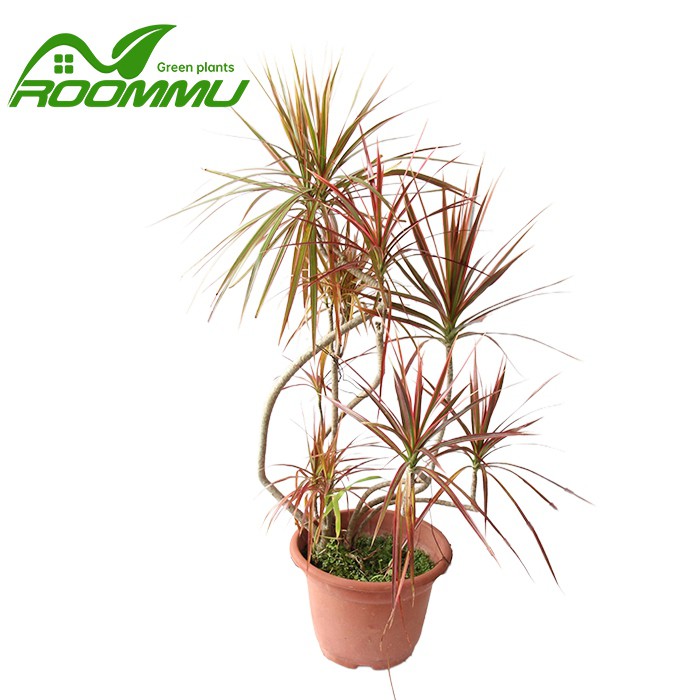
Dracaena sanderiana (Lucky Bamboo)
Although often mistaken for bamboo, Dracaena sanderiana is a part of the Dracaena genus. While it rarely flowers in cultivation, in its natural environment, it produces small white or pale pink flowers. The flowers are arranged in loose clusters and are quite inconspicuous compared to some of the other Dracaena species. However, the fact that they bloom at all is a rare and special event for plant owners.
Dracaena Bicolor Braided Plant
The Dracaena Bicolor Braided Plant is a unique and visually appealing variety. Its flowers are a sight to behold. The inflorescence is a compact, spherical cluster that sits atop the plant's stem. The individual flowers are pale pink, with a hint of lavender at the tips of the tepals. The petals are slightly ruffled, giving them an elegant and delicate appearance. The overall effect of the flower cluster is both beautiful and eye - catching, making it a real showstopper when in bloom.
The Significance of Dracaena Flowers
Beyond their aesthetic appeal, Dracaena flowers have some ecological and cultural significance. In their natural habitats, the flowers play a crucial role in the plant's reproductive cycle. They attract pollinators, which help transfer pollen from one flower to another, leading to fertilization and the production of seeds.
Culturally, Dracaena plants are often associated with good luck, positive energy, and purification in many cultures. The rare occurrence of their flowers can be seen as a sign of good fortune and prosperity. In some traditional practices, the flowers are used in small rituals or are considered symbolic of the plant's well - being and the harmony of the surrounding environment.
Caring for Dracaena Plants to Encourage Flowering
If you are a plant enthusiast hoping to see your Dracaena plant flower, there are several steps you can take. First, make sure your plant is placed in an area with bright, indirect light. Too much direct sunlight can scorch the leaves and damage the flower buds, while too little light can prevent the plant from getting the energy it needs to bloom.
Water your Dracaena plant properly. Allow the top few inches of soil to dry out between waterings. Over - watering can lead to root problems, which can inhibit flowering. Use a well - draining potting mix to ensure good drainage.
Fertilize your plant regularly during the growing season (spring and summer). A balanced, water - soluble fertilizer can provide the necessary nutrients for healthy growth. However, be careful not to over - fertilize, as this can also cause harm to the plant.
Finally, be patient. As mentioned earlier, Dracaena plants often take several years to reach maturity and may not bloom every year. With the right care and conditions, you may be rewarded with the beautiful sight and fragrance of their flowers.
Conclusion
In conclusion, the flowers of Dracaena plants are a delightful and often overlooked aspect of these popular houseplants. From the star - like white flowers of Dracaena marginata to the fragrant creamy - white blooms of Dracaena fragrans and the charming pink clusters of the Dracaena Bicolor Braided Plant, each species has its own unique floral display.
If you are interested in adding these beautiful plants to your collection or are a business looking to source high - quality Dracaena plants, we are here to help. We offer a wide variety of Dracaena species, all carefully nurtured to ensure their health and vitality. Whether you are a novice plant owner or an experienced horticulturist, our plants will add a touch of elegance and natural beauty to any space. Contact us to start a discussion about your procurement needs, and let's bring the beauty of Dracaena plants to your environment.
References
- Arber, A. (1925). Monocotyledons: A Morphological Study. Cambridge University Press.
- Benzing, D. H. (1990). Vascular Epiphytes: General Biology and Related Biota. Cambridge University Press.
- Gilmartin, P. M., & Brown, R. C. (1987). The biology of Dracaena (Agavaceae). American Journal of Botany, 74(6), 924 - 935.