

Yo! If you're into the world of cacti, you know that these prickly plants come in all sorts of mind - blowing shapes. As a cactus shape supplier, I've seen them all up close and personal. So, let's take a deep dive into the common shapes of cacti!
Columnar Cacti
One of the most recognizable shapes in the cactus family is the columnar shape. Think of those tall, skinny cacti that seem to reach for the sky. These cacti often grow vertically and can get pretty darn tall. Some columnar cacti can reach heights of over 30 feet in the wild!
Columnar cacti have a simple yet elegant structure. They're usually tubular, with ribs running up and down their long bodies. These ribs not only give the cacti their unique look but also serve a practical purpose. In hot desert environments, the ribs help the cactus expand and contract as it absorbs and stores water. This way, it can survive during long periods of drought.
One well - known columnar cactus is the Saguaro cactus. It's like the poster child for the American Southwest. These giants have arms that branch out at different heights, looking a bit like a welcoming giant. They can live for over 150 years and are a vital part of the desert ecosystem, providing homes for birds and other critters.
As a supplier, we offer a variety of columnar cacti. They're great for adding a touch of the desert to your garden or indoor space. Whether you want a small, young columnar cactus to start growing or a more mature one to make an immediate statement, we've got you covered.

Globular Cacti
Next up are the globular cacti. These guys are round or oval - shaped, like little green balls plopped onto the ground. They're often much shorter and wider compared to columnar cacti.
The reason behind their spherical shape is all about water storage. A round shape has the smallest surface - area - to - volume ratio, which means less water is lost to evaporation. This is a huge advantage in the arid desert where water is scarce.
Many globular cacti produce beautiful, brightly - colored flowers. These flowers can be a stark contrast to the tough, prickly exterior of the cactus. It's like a hidden surprise!
We have a wide range of globular cacti in our inventory. They're perfect for small spaces, like windowsills or terrariums. You can collect different types and create a mini - desert landscape right in your living room.
Pad - like or Opuntia Cacti
Pad - like cacti, also known as Opuntia cacti, have flat, paddle - shaped segments. These pads are connected to each other, creating a unique and often sprawling look. The pads are both the stem and the leaf of the cactus.
The pads of Opuntia cacti are pretty versatile. They can store water, just like in other cacti, but they also photosynthesize, helping the cactus make its food. Some Opuntia cacti have spines all over their pads, while others have glochids, which are tiny, barbed hairs that can be a real pain if they get on your skin.
These cacti are not only interesting to look at but also have practical uses. In some cultures, the pads of certain Opuntia cacti are eaten as a vegetable, and the fruits, called tunas, are used to make jams and drinks.
As a supplier, we offer different varieties of Opuntia cacti. They can be a great addition to a xeriscape garden, where you're aiming for a low - water landscape.
Crested Cacti
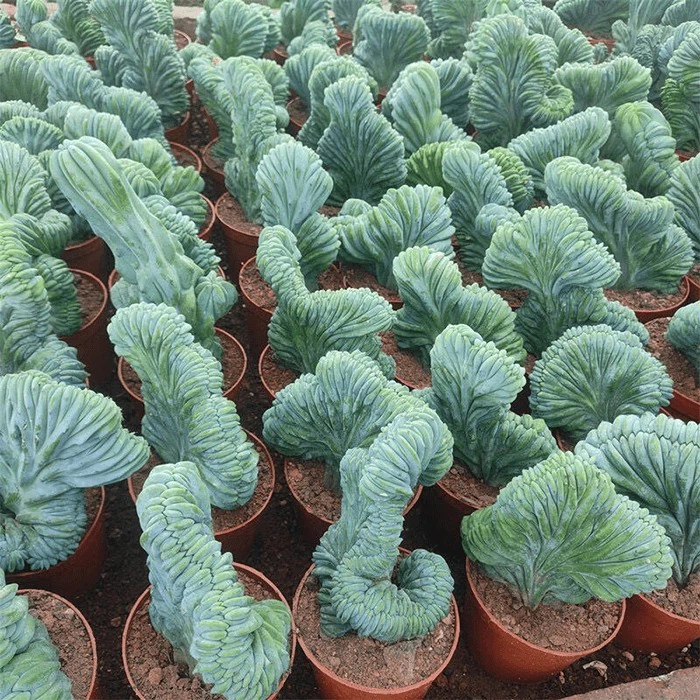
Now, let's talk about something really funky - crested cacti. These are a result of a genetic mutation. Instead of growing in the normal way, the growing tip of the cactus expands in a fan - like or wavy shape.
The exact reason for this mutation isn't fully understood, but it creates some truly unique and eye - catching cacti. Crested cacti can come in various base shapes, like columnar or globular, but with that crazy crested growth on top.
One popular crested cactus is the Myrtillocactus Geometrizans Cristata Cactus. Its wavy, crested top looks like something out of a science - fiction movie. These cacti are highly sought after by collectors because of their rare and unusual appearance.
At our supply business, we've managed to get our hands on some amazing crested cacti. They're the kind of plants that will make your friends and neighbors do a double - take when they see them in your garden or plant collection.
Branched Cacti
Branched cacti are another common shape. As the name suggests, these cacti have multiple branches that spread out from a central stem. The branches can be long and thin, like arms reaching out, or shorter and stubbier.
The branching pattern of these cacti serves different purposes. It can help the cactus capture more sunlight for photosynthesis. It also provides more surface area for the cactus to store water.
These cacti can add a lot of texture and movement to a garden. They look particularly nice when grouped together with other cacti of different shapes and sizes.
We offer a selection of branched cacti. Whether you want a large, show - stopping specimen or a small one to add to a collection, we can help you find the right fit.
Why Choose Us as Your Cactus Shape Supplier
As a cactus shape supplier, we've put in the hard work to source the best - looking and healthiest cacti. We understand the unique needs of these plants, from the right soil mix to the proper watering schedule.
Our cacti are carefully grown and nurtured to ensure they're in top - notch condition when they reach your hands. Whether you're a professional landscaper looking to add some cacti to a project or an amateur plant lover wanting to start a collection, we've got the perfect cacti for you.
If you're interested in purchasing cacti of different shapes, we're here to help. We can provide you with all the information you need about caring for your new cacti. Whether it's advice on sunlight, water, or soil, we've got the knowledge to make sure your cacti thrive.
So, if you're ready to add some unique cactus shapes to your life, get in touch with us. Let's start a conversation about which cacti are the best fit for your needs. Whether it's a towering columnar cactus, a cute globular one, or a funky crested specimen, we're here to make your cactus dreams a reality.
References
- Anderson, E. F. (2001). The Cactus Family. Timber Press.
- Gibson, A. C., & Nobel, P. S. (1986). The Physiology of Cacti. Scientific American Library.