

The toothpick cactus, scientifically known as Stetsonia coryne, is a fascinating plant that has adapted uniquely to its natural environment. As a supplier of various cactus shapes, I've had the privilege of closely observing the toothpick cactus and understanding how its shape plays a crucial role in its survival.
Adaptation to Arid Conditions
One of the most prominent features of the toothpick cactus is its slender, cylindrical shape. This form is a remarkable adaptation to the arid environments where it typically thrives. In regions with limited water availability, minimizing water loss is of utmost importance. The toothpick cactus achieves this through its shape.
The cylindrical shape reduces the surface - to - volume ratio. A lower surface - to - volume ratio means that there is less surface area exposed to the dry air, which in turn reduces the rate of water evaporation. Unlike broader - shaped plants that have a larger surface area for water to escape from, the toothpick cactus can conserve water more effectively. This is essential for its survival in deserts and semi - arid areas where rainfall is scarce, and water is a precious resource.
Another aspect related to water conservation is the cactus' ability to store water. The cylindrical body of the toothpick cactus acts as a reservoir. It can expand to hold large amounts of water when it rains and then slowly use this stored water during dry periods. The shape allows for efficient storage, as the interior of the cylinder provides a large volume for water storage while the relatively small surface area helps prevent excessive water loss.
Protection from Predators
The toothpick cactus gets its common name from its thin, needle - like appearance, which also serves as a defense mechanism. The slender and spiny shape deters many potential predators. Animals that might otherwise be tempted to eat the cactus for its water content are discouraged by the sharp spines.
These spines are not just randomly placed; they are arranged in a way that maximizes protection. They cover the surface of the cactus, creating a barrier that is difficult for animals to penetrate. The shape of the spines, which are long and pointed, makes it uncomfortable and even dangerous for predators to get close to the cactus. This is a vital adaptation in an environment where resources are scarce, and competition for food is high.
Light Absorption and Photosynthesis
In the natural environment, sunlight is a critical factor for a plant's survival, especially for photosynthesis. The toothpick cactus' shape allows it to optimize light absorption. The slender cylindrical shape means that the cactus can receive sunlight from multiple angles throughout the day.
Unlike a flat - shaped plant that may only receive direct sunlight for a limited time, the toothpick cactus can capture sunlight from different directions as the sun moves across the sky. This is particularly important in desert environments where sunlight is intense but may be blocked by rocks or other obstacles. The cactus can adjust to the changing light conditions and still carry out photosynthesis effectively.
Moreover, the shape helps in reducing the heat stress caused by intense sunlight. The cylindrical form allows the cactus to dissipate heat more efficiently compared to a plant with a larger, flatter surface area. The thin shape reduces the amount of heat that is absorbed, and the spines also provide some shade, further protecting the cactus from overheating.
Wind Resistance
Desert environments are often characterized by strong winds. The toothpick cactus' shape provides excellent wind resistance. The slender, streamlined shape reduces the drag force exerted by the wind. Unlike a broader - shaped plant that might be easily toppled by strong gusts, the toothpick cactus can withstand windy conditions.
The cactus' roots are also well - adapted to its shape. They are long and spread out widely to anchor the cactus firmly in the ground. This combination of a streamlined above - ground shape and a well - developed root system allows the toothpick cactus to remain stable even in the face of strong desert winds.
Comparison with Other Cactus Shapes
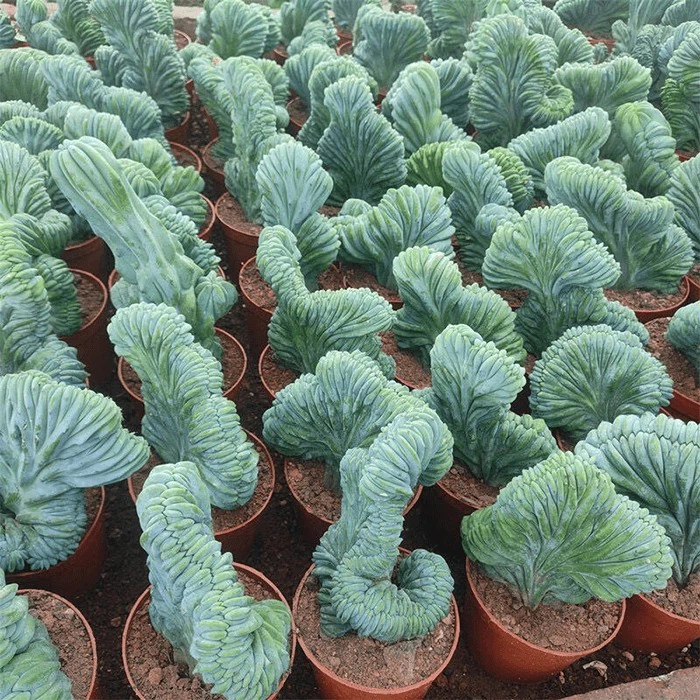
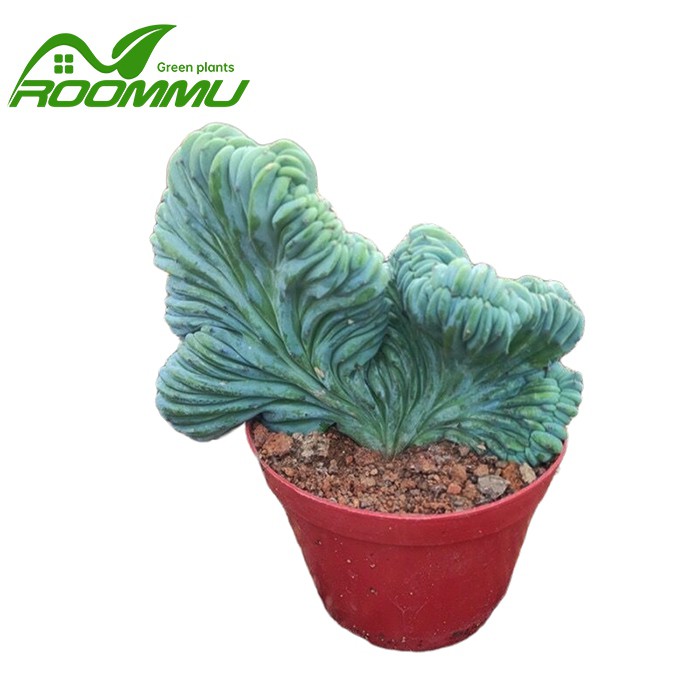
As a cactus shape supplier, I've had the opportunity to compare the toothpick cactus with other cacti, such as the Myrtillocactus Geometrizans Cristata Cactus. The Myrtillocactus Geometrizans Cristata Cactus has a crested or fan - shaped appearance, which is quite different from the toothpick cactus' cylindrical shape.
The crested shape of the Myrtillocactus Geometrizans Cristata Cactus is an adaptation to a different set of environmental conditions. It may have a larger surface area, which could be beneficial in areas with more diffuse sunlight, as it can capture more light for photosynthesis. However, this also means that it may lose water more quickly compared to the toothpick cactus.
The toothpick cactus, with its focus on water conservation, protection, and wind resistance, is better suited to extremely arid and windy desert environments. Each cactus shape is a result of millions of years of evolution, adapting to the specific challenges of its natural habitat.
Implications for Cactus Shape Supply
Understanding how the shape of the toothpick cactus helps it in its natural environment is crucial for us as a cactus shape supplier. We can use this knowledge to better care for the cacti we supply and to educate our customers.
When we provide toothpick cacti to customers, we can explain the importance of mimicking their natural environment as closely as possible. For example, we can recommend well - drained soil to prevent waterlogging, as the cactus is adapted to dry conditions. We can also advise on proper sunlight exposure, taking into account the cactus' unique light - absorption requirements.
In addition, the knowledge of cactus shapes can help us in selecting the right cacti for different customer needs. If a customer has a dry, sunny, and windy outdoor space, the toothpick cactus might be an ideal choice. On the other hand, if the customer has a more shaded area, a cactus with a different shape, like the Myrtillocactus Geometrizans Cristata Cactus, could be more suitable.
Contact for Procurement
If you are interested in purchasing toothpick cacti or other unique cactus shapes, we are here to assist you. Our team of experts can provide you with detailed information about the cacti, their care requirements, and how to incorporate them into your space. Whether you are a home gardener looking to add some desert charm to your garden or a commercial landscaper in need of large - scale cactus supplies, we have the solutions for you. Reach out to us to start a procurement discussion and find the perfect cacti for your needs.
References
- Anderson, E. F. (2001). The Cactus Family. Timber Press.
- Gibson, A. C., & Nobel, P. S. (1986). The Cactus Primer. Harvard University Press.