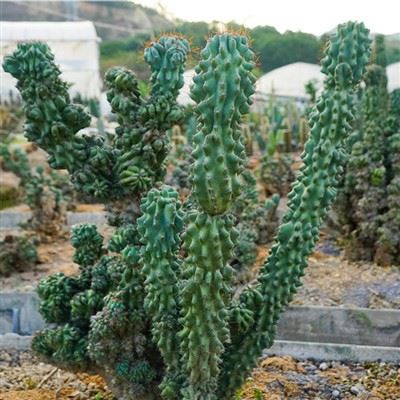
Road Kill Cactus Features
Pads:
The cactus has flattened, oval to elongated pads that are segmented. These pads are typically green but can turn reddish under stress or full sunlight, which is reflected in its species name "rubescens," meaning "reddening."
Spines:
The pads are armed with clusters of short, sharp spines, and some varieties may have glochids (tiny, hair-like spines) that can cause skin irritation.
Flowers:
The cactus produces small, yellow to orange-red flowers that emerge from the edges of the pads. These flowers are followed by small, fleshy fruits that are red when ripe.
Growth Habit:
Consolea rubescens tends to grow in a sprawling or clumping habit, often forming dense thickets. It spreads both horizontally and vertically, creating a significant presence in its habitat.
Consolea rubescens cactus Plant Size:
- Consolea rubescens can grow up to 10-15 feet (3-4.5 meters) tall when fully mature. However, it often has a sprawling, bush-like growth habit rather than forming a tall, upright structure.
Consolea rubescens cactus Special Care or Planting instructions
- Light
Prefers full sun and needs plenty of light to thrive. It can tolerate partial shade but may become leggy and lose its compact form.
- Water
Water sparingly, as the cactus is drought-tolerant. Allow the soil to dry out completely between waterings to prevent root rot.
- Soil
Requires well-drained soil, ideally sandy or rocky. It is well-suited for coastal environments and can tolerate saline conditions.
- Temperature
It prefers warm temperatures and is not frost-tolerant. In colder climates, it should be grown in containers and brought indoors during the winter.
- Propagation
Propagation is typically done through cuttings. Pads can be cut, allowed to callous, and then planted in well-draining soil.
Safety of Consolea rubescens cactus
Keep out of reach of children and pets. Place it in locations where curious hands or paws cannot reach it.
Hot Tags: consolea rubescens cactus, China consolea rubescens cactus, Euphorbia Cooperi, Aloe Marlothii Mountain Aloe, Agave Americana Alba Marginata , Full Grown Madagascar Palm, Large Saguaro Cactus, Large Golden Barrel Cactus