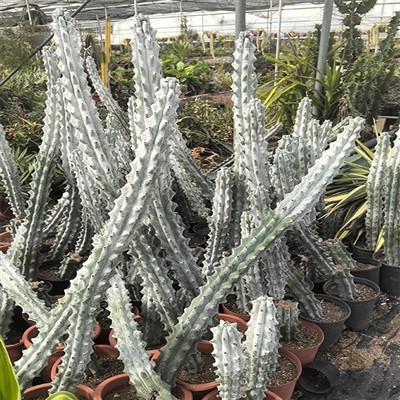
Cereus peruvianus variegated Cactus Features
Morphological characteristics: Cereus peruvianus variegated has a columnar plant with many branched, tree-like stems, which can reach a height of more than 10 meters and a diameter of 10 to 20 cm. The young stems are bluish-pink, then dark green, with blunt tips, brown soft hairs and thorns, 4 to 9 ribs, 2.5 cm high, straight ribs, deep grooves between ribs, and thorn clusters on the ridges.
Variegated variation: The characteristic of the variegated variation is that the stems of the plant show alternating yellow and green stripes, which makes the plant more ornamental.
Flowers: The flowers are large, trumpet-shaped, 15 to 18 cm long, green outside and red inside, and the flowering period is from May to July.
Fruit: The fruit is spherical, 6.5 cm in diameter, and bright red.
Cereus peruvianus variegated Cactus Size:
- Natural Growth Height: Under natural conditions, Cereus peruvianus can grow to over 10 meters in height.
-
Indoor Growth Height: When cultivated indoors, Cereus peruvianus usually reaches a maximum height of about 5-6 feet (approximately 1.5-1.8 meters).
Cereus peruvianus variegated Cactus Special Care or Planting instructions
- Light
Cereus peruvianus variegated requires full sun, preferably full sun.
- Water
Less water is needed, soil should be kept slightly moist but not too wet to avoid root rot. In winter, watering should be further reduced.
- Soil
Suitable for growing in well-drained soil, you can choose a special cactus soil mix, and perlite or coarse sand can be added to enhance drainage.
- Cold tolerance
It is relatively cold-tolerant and can tolerate some low temperatures, but it needs protection from frost in winter. It is best to move indoors when temperatures begin to drop below 50°F, although they can tolerate temperatures as low as 32°F without serious damage.
- Fertilization
Use a balanced cactus fertilizer, such as Super Kabuto Cactus Fertilizer, during the growing season (spring and summer), apply according to the instructions, and be careful not to overfertilize.
- Propagation
Propagate by side shoots (pups) or seeds. The lateral shoots are small seedlings growing from the base of the mother plant. Carefully cut the lateral shoots from the base using a sharp sterile knife, remove excess soil and allow the cut to callus, then plant in well-drained peat-based compost until the cactus takes root.
Hot Tags: cereus peruvianus variegated, China cereus peruvianus variegated, Blue Cereus Cactus, Dracaena Sanderiana Lucky Bamboo Plant, Hoya Kerrii Heart, Mammillaria Perezdelarosae Subsp Andersonii, aglaonema plant, Dracaena Bicolor Braided Plant