

Ferocactus stainesii var. Pilosus cactus Features
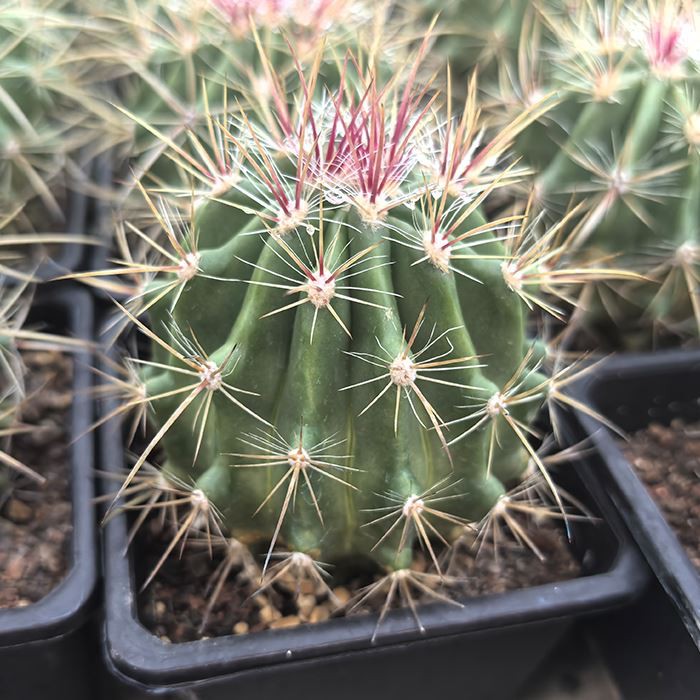
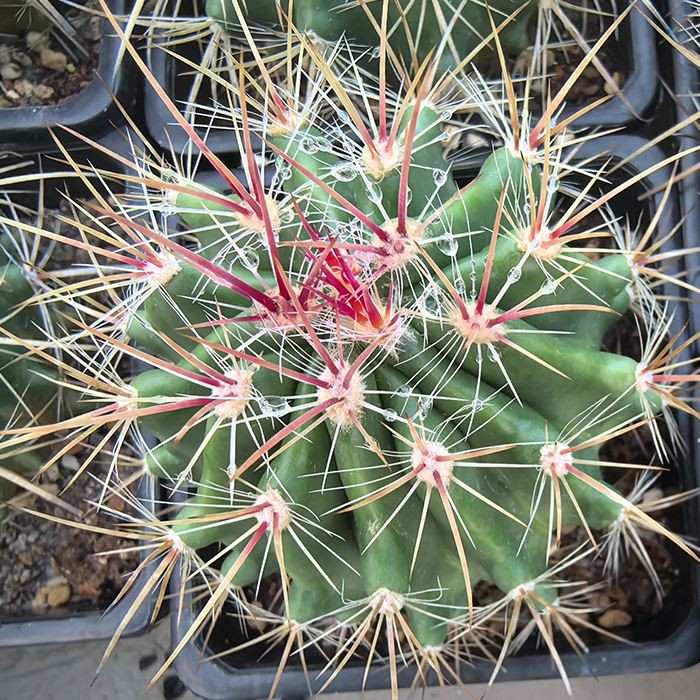
Body: The body of Ferocactus stainesii var. pilosus is barrel-shaped and ribbed, with a deep green color. As the plant matures, it can grow quite large, sometimes reaching heights of up to 3 meters (10 feet) in the wild, though in cultivation it usually remains smaller. The plant has 15 to 25 ribs, each covered with tubercles and spines.
Spines: One of the most notable features of this cactus is its long, bristle-like spines. These spines are often reddish, orange, or yellow, giving the cactus its "fire barrel" nickname. The spines are dense, curving slightly, and can be quite sharp, making the plant well-defended against herbivores.
Flowers: Ferocactus stainesii var. pilosus produces beautiful, bright red to yellow flowers that appear in a ring near the top of the plant. The flowers are funnel-shaped and can be up to 5 cm (2 inches) in diameter. Flowering typically occurs in late summer, and the flowers are followed by small, fleshy fruits that contain numerous seeds.
Ferocactus stainesii var. Pilosus cactus Size:
- Potted in a 12-20 cm pot
-
The height of the plants and the flower pots can be made to your size.
Ferocactus stainesii var. Pilosus cactus Special Care or Planting instructions
- Light
Ferocactus stainesii var. pilosus* requires full sunlight to thrive. It can tolerate intense sun, making it suitable for outdoor gardens in hot, arid climates. Indoors, it should be placed in a location where it receives plenty of bright, direct sunlight, such as a sunny windowsill.
- Water
Water the plant thoroughly during the growing season (spring and summer), allowing the soil to dry out completely between waterings. During the winter months, reduce watering significantly, as the plant goes dormant and requires less moisture. Overwatering can lead to root rot, so it's important to err on the side of under-watering.
- Soil
A well-draining cactus or succulent mix is essential for this plant. Adding extra perlite or pumice to the soil mix will improve drainage, which helps prevent root rot. In its native habitat, it grows in rocky, mineral-rich soils, so it appreciates a gritty substrate.
- Temperature
This cactus thrives in hot temperatures, ideally between 70°F and 100°F (21°C to 38°C). It is not frost-tolerant and should be protected from freezing temperatures. In colder climates, it should be grown in containers that can be moved indoors during winter.
- Propagation
Ferocactus stainesii var. pilosus* can be propagated from seeds. However, it is a slow-growing cactus, so patience is required. Seeds should be sown in a well-draining mix and kept warm and moist until germination.
- Handling
Due to its long, sharp spines, handling this cactus requires care. Use thick gloves or tools when moving or repotting the plant to avoid injury.
- Growth Rate
Ferocactus stainesii var. pilosus* grows slowly, especially when cultivated in pots. However, with proper care, it can become a long-lasting and impressive specimen in any cactus collection.
- Pests
This cactus is generally resistant to pests, though it can occasionally suffer from infestations of mealybugs or spider mites. Regular inspection and treatment with insecticidal soap or neem oil can keep these pests at bay.
Hot Tags: ferocactus stainesii var. pilosus, China ferocactus stainesii var. pilosus, Mammillaria Carmenae Cristata, Mammillaria Albilanata Cristata, succulents plant, Euphorbia Cooperi, cactus shape, Sansevieria Golden Flame Plant


