


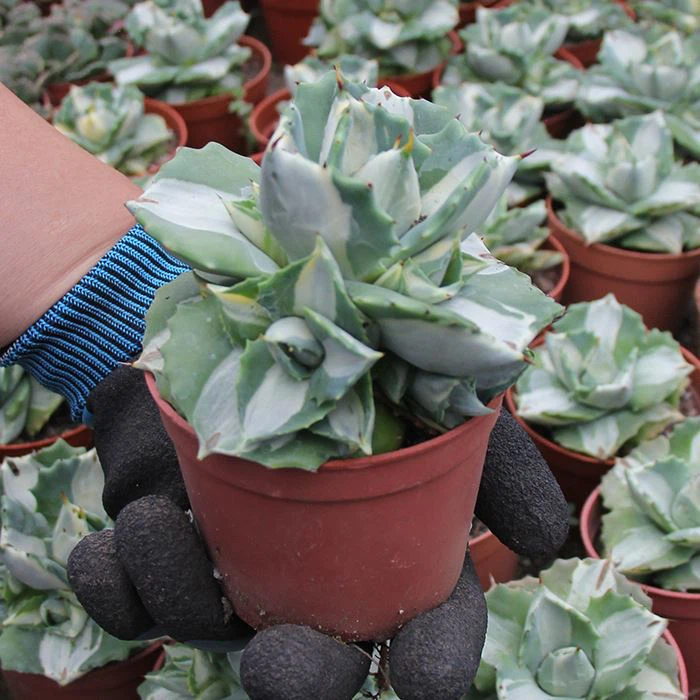
Agave isthmensis Hoji Raijin Features
Appearance
Shape: 'Hoji Raijin' has a rosette-shaped growth habit with thick, fleshy leaves that form a tight, symmetrical spiral. The rosette tends to remain compact, making it a suitable choice for small gardens, containers, or as a specimen plant in succulent displays.
Color: The leaves of 'Hoji Raijin' typically have a striking blue-gray to greenish-blue hue, often with a glossy or waxy appearance. When exposed to stress, such as changes in light or temperature, the edges of the leaves may turn a reddish or purplish color, enhancing its ornamental value.
Spines: The leaves have small, sharp spines along their margins, and the central spine at the leaf tip is particularly pronounced. These spines can vary in color, typically yellow or pale in hue, and add texture to the overall plant appearance.
Size: Agave isthmensis 'Hoji Raijin' remains relatively small compared to other agave species. It typically grows up to 30-40 cm (12-16 inches) in height and can spread up to 50-60 cm (20-24 inches) in diameter.
Growth Habit
Growth Rate: This cultivar is slow-growing, a characteristic shared with most agave species. While it takes time to reach its mature size, it is a long-lived plant and can thrive for many years when properly cared for.
Flowering: Agave isthmensis 'Hoji Raijin' will eventually produce a tall flowering stalk (scape) that can reach up to 2 meters (6-7 feet) in height. The flowers are typically yellow or greenish and bloom in late spring to summer. After flowering, the plant will die (as with all agaves), but it will often produce offsets around the base that can be propagated.
Agave isthmensis Hoji Raijin Size:
- Potted in a 10cm pot
Agave isthmensis Hoji Raijin Special Care or Planting instructions
- Light
Sunlight: Agave isthmensis 'Hoji Raijin' requires full sun to partial shade for optimal growth and coloration. In full sun, the plant's leaves will take on a deeper, more intense color. If grown indoors, place it near a south or west-facing window to ensure it receives adequate light.
Indoor Care: If growing indoors, ensure that the plant receives bright, indirect light for most of the day. Direct sunlight may be too harsh indoors, leading to potential sunburn.
- Water
Watering Needs: Like most agaves, Agave isthmensis 'Hoji Raijin' is drought-tolerant and should be watered deeply but infrequently. Let the soil dry out completely between waterings to avoid overwatering, which can lead to root rot.
Winter Care: In winter, reduce watering as the plant enters a semi-dormant state. During this time, the agave needs less water, and overwatering can lead to health issues.
- Soil
Soil Type: This cultivar requires well-draining soil. A cactus or succulent mix, or a custom mix made of sand, perlite, and organic matter, is ideal. This will ensure that the water drains quickly, preventing root rot.
pH: Agave 'Hoji Raijin' prefers slightly acidic to neutral soil, typically with a pH between 6.0 and 7.0.
- Temperature
Ideal Temperature: Agave isthmensis 'Hoji Raijin' prefers warm conditions and thrives in temperatures between 20°C and 30°C (68°F to 86°F).
Cold Sensitivity: This agave is not frost-tolerant. If temperatures drop below 10°C (50°F), the plant can be damaged. In colder climates, it's best to grow this plant in containers so that it can be brought indoors during the winter months.
- Fertilization
Fertilizing: Feed the plant with a diluted, low-nitrogen cactus fertilizer during the growing season (spring and summer). This will help encourage healthy growth and flowering. Avoid fertilizing in the winter when the plant is dormant.
Over-Fertilizing: Too much fertilizer can cause the plant to grow too quickly, leading to weak growth and reduced ornamental value. Stick to a moderate feeding schedule to maintain its health and appearance.
- Pruning
Minimal Pruning: Agave isthmensis 'Hoji Raijin' requires little pruning. However, if the plant produces offsets (pups) around the base, these can be removed to maintain a tidy appearance or to propagate new plants.
Flower Stalk Removal: Once the plant flowers and the flower stalk dies, it can be pruned off. This will help keep the plant looking neat and prevent energy from being wasted on a spent bloom.
- Pest and Disease Management
Pests
Common Pests: Agave isthmensis 'Hoji Raijin' can sometimes be affected by pests like aphids, mealybugs, scale insects, and spider mites. Regularly inspect the plant for signs of pests, and treat infestations with insecticidal soap or neem oil if necessary.
Snails and Slugs: If growing in humid conditions, snails and slugs can sometimes damage the leaves. Use traps or slug pellets to control these pests.
Diseases
Root Rot: Overwatering is a primary cause of root rot in agaves. Ensure the soil is well-draining, and avoid waterlogging. If growing in a pot, ensure there are drainage holes.
Fungal Infections: Fungal diseases like powdery mildew or leaf rot can occur if the plant is kept in overly humid conditions. Always provide good air circulation and avoid watering directly on the leaves.
- Uses and Landscape Applications
Ornamental Value
Agave isthmensis 'Hoji Raijin' is highly ornamental due to its compact, symmetrical rosette and unique coloration. It adds a sculptural element to gardens and can be a beautiful focal point in succulent and desert-themed landscapes.
The plant's vibrant color and striking form make it an attractive option for containers, rock gardens, xeriscaping, or as a specimen plant in mixed garden beds.
Container Planting
This cultivar is well-suited to container gardening. It can be grown in decorative pots or small planters and placed on patios, balconies, or indoors. It's a good choice for smaller spaces where its size and slow growth are appreciated.
Low-Maintenance Landscaping
Thanks to its drought tolerance and minimal care requirements, Agave isthmensis 'Hoji Raijin' is a great choice for low-maintenance landscaping. It can be used to create visual interest in water-efficient or xeriscape gardens.
Hot Tags: agave isthmensis hoji raijin, China agave isthmensis hoji raijin, Gymnocalycium Schickendantzii, Mammillaria Magnimamma Cristata, Echinocactus Setispinus, Anthurium Clarinervium Plant, sedum plant, philodendron plant


