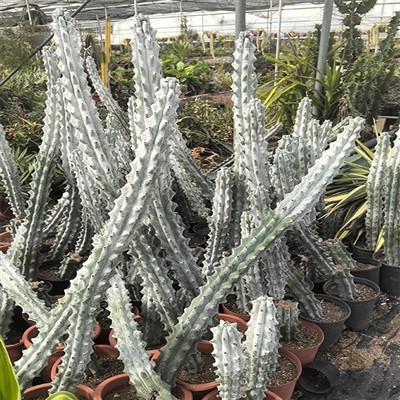
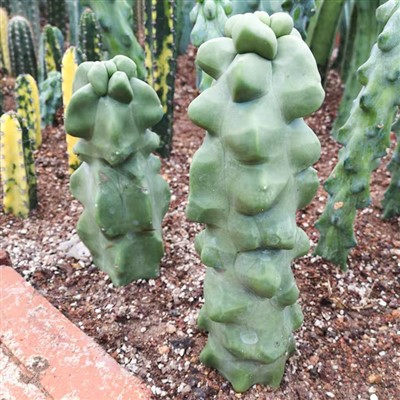
Opuntia dejecta cactus Features
Morphology: The palmate stems are flat, green to gray-green, thick and narrow, lanceolate, and usually drooping.
Spikes: The areoles on the palmate stems usually have two slightly spread spines, which are initially pale yellow or pink, turn gray over time, and can be up to 1.6 inches (about 4 cm) long.
Flower color: Deep red flowers are produced in summer on the upper part of the palmate stems.
Fruit: The dark red barrel-shaped fruit contains numerous tiny black seeds.
Opuntia dejecta cactus Size:
- Opuntia dejecta is a fleshy, evergreen, thorny shrub or small tree-like cactus, usually 1-2 meters in height, sometimes up to 5 meters.
Opuntia dejecta cactus Special Care or Planting instructions
- Light
Opuntia dejecta grows well in full sun, but in hot climates, some midday and afternoon shade will prevent sunburn. When grown indoors, it needs at least 6 hours of sun per day.
- Soil
This cactus requires a well-drained soil mix. Commercially available cactus potting soil or a homemade mix can be used.
- Temperature
Opuntia dejecta tolerates heat and also prefers cooler winter temperatures. It grows best in USDA plant hardiness zones 9a through 11b, with average winter minimum temperatures ranging from 20°F to 50°F (about -6.7°C to 10°C).
- Watering
Water moderately from spring to fall, and allow the soil to dry completely before watering again. In most areas, rainfall is usually sufficient for mature plants. If grown in pots, never let the container sit in water. Suspend watering in winter.
- Fertilization
Opuntia dejecta does not require additional fertilizer when grown in the ground. However, if grown in pots, it will benefit from fertilizer during the growing season. Apply water-soluble fertilizers and stop fertilizing during the winter when the plant is dormant.
- Propagation
It can be propagated by stem segments or seeds. Using stem segments is the easiest and fastest method, and it is best to take stem segments in early summer and sow seeds in late spring.
Hot Tags: opuntia dejecta, China opuntia dejecta, Astrophytum Asterias Cv Kikkos Turtle Shell, Anthurium Black Love, Notocactus Buiningii, Tephrocactus Geometricus Cactus, Asparagus Retrofractus Plants, Myrtillocactus Geometrizans Cristata Cactus