

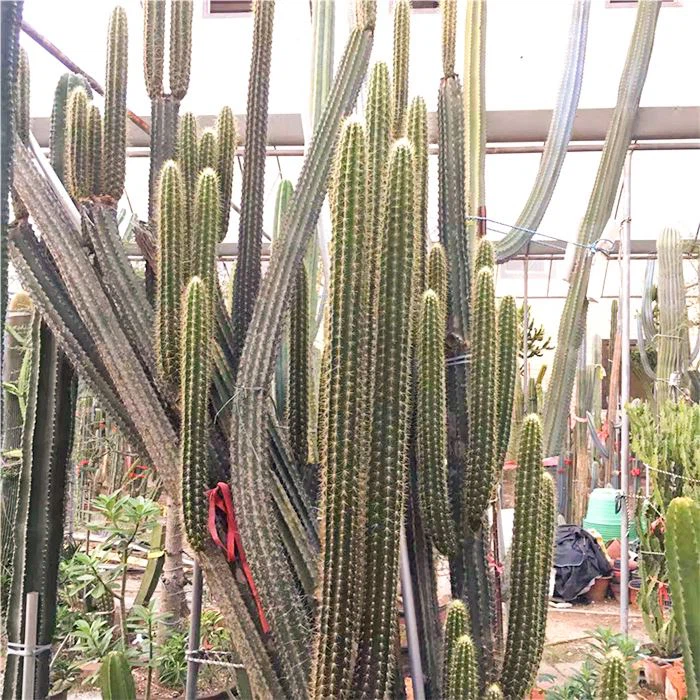

Pilosocereus chrysostele Cactus Features
Form: Pilosocereus chrysostele is a shrubby cactus that can grow quite tall and is commonly found in the Bahia, Ceará and Pernambuco regions of Brazil. This cactus branches from the base.
Color: Its stems are bluish green and covered with dense golden spines that can be up to 5 cm long
Flowers: Pilosocereus chrysostele produces pink or white flowers that usually open at night
Fruit: It produces fleshy fruits that are edible and often used to make jams and other desserts
Pilosocereus chrysostele Cactus Size:
- Golden Pilar cactus can reach a height of 4-9 feet (about 1.2-2.7 meters).
Pilosocereus chrysostele Cactus Special Care or Planting instructions
- Light
Pilosocereus chrysostele requires full sun, at least 8 hours of direct sunlight per day, and can tolerate full sun to light shade.
- Water
This cactus prefers dry soil and should be watered moderately. Water more frequently in extreme conditions, but make sure the soil is completely dry before watering.
- Soil
Use a well-draining soil mix that can include perlite or vermiculite to enhance drainage. It is recommended to use a soil specifically made for cacti or succulents to prevent water from pooling around the roots, which can cause root rot.
- Temperature
Pilosocereus chrysostele prefers warm temperatures and can tolerate lower humidity levels.
- Fertilization
Use a balanced cactus fertilizer about once a month during the growing season to provide necessary nutrients without overdoing it.
- Propagation
Propagation can be done by stem cuttings. Take a healthy stem segment and allow the cutting to dry to form a callus before planting in well-drained soil.
- Pruning
This cactus does not usually require pruning, but any dead or damaged parts can be removed to maintain its appearance.
- Hardening
Pilosocereus chrysostele grows in USDA zone 10 and can tolerate lower temperatures, but the specific hardiness temperature is not specified.
Hot Tags: pilosocereus chrysostele, China pilosocereus chrysostele, Anthurium Flamingo Red, Ferocactus Emoryi Covillei, Cactus Moon Grafted, Gymnocalycium Anisitsii Cristata Variegata, podocarpus plant, aloe plant


