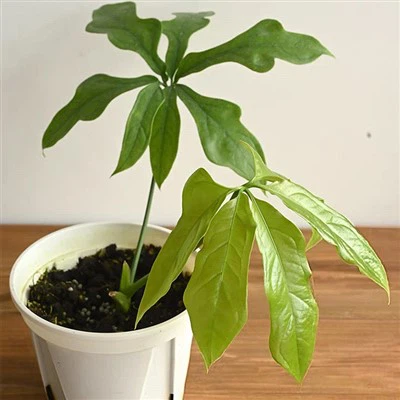
Anthurium Dorayaki Plant Features
1. Foliage:
Anthurium dorayaki is most notable for its large, heart-shaped leaves that are deep green, glossy, and smooth.
The leaves are typically dark green with a slightly leathery texture and prominent veins that enhance their visual appeal.
As the plant matures, the leaves can grow quite large, with a broad and dramatic appearance, making it an excellent choice for indoor decor.
2. Flowers:
Like many Anthurium varieties, Anthurium dorayaki produces a spadix surrounded by a spath (modified leaf). The spadix of this cultivar is usually yellow or green, and the spath can range from cream-colored to light green.
The flowers are not as bright or flashy as the more traditional red or pink varieties of Anthurium, but they have a subtler, more sophisticated charm.
3. Growth Habit:
Anthurium dorayaki is a slow-growing plant, developing into a compact bushy form over time. The plant can reach a height of 40-60 cm (16-24 inches) under the right growing conditions.
It is a clump-forming species that grows from a central rosette of leaves.
4. Overall Appearance:
Anthurium dorayaki presents a unique and attractive appearance. It is usually a small to medium-sized plant, with a height of about 20 to 50 cm. The plant is relatively compact, and the leaves and flower stems grow from the relatively short stem base, forming a clumping look and appearing vibrant.
5. Rhizome:
The rhizome is short, thick and fleshy, with good water and nutrient storage functions. Its root system is well-developed, mostly fleshy roots, which can effectively absorb water and various nutrients from the soil, providing strong support for the growth of the plant.
Anthurium Dorayaki Plant Size:
- Accepting tissue culture plantlet orders
-
The height of the plants and the flower pots can be made to your size
Anthurium Dorayaki Special Care or Planting instructions
- Light
Like most Anthuriums, this cultivar thrives in bright, indirect light. It should be placed in a well-lit area but not in direct sunlight, which can scorch its delicate leaves.
Too much light can cause the leaves to yellow, while too little light will result in slow growth and less vibrant leaves.
- Water
Water the plant when the top inch of soil feels dry. Ensure that you water thoroughly, allowing water to drain out of the pot's drainage holes.
Be cautious not to overwater, as this can lead to root rot. Let the soil dry slightly between waterings, and never allow the plant to sit in standing water.
- Humidity
Being a tropical plant, Anthurium dorayaki thrives in high humidity environments, ideally between 60% and 80%.
If you live in a dry climate, consider using a humidifier or placing the plant on a moisture tray filled with pebbles and water to help maintain humidity levels.
- Temperature
Anthurium dorayaki prefers warm conditions, ideally between 18°C to 28°C (65°F - 82°F).
This plant is sensitive to cold and should be kept in an environment that does not drop below **15°C (59°F)**, as lower temperatures can cause stress to the plant and stunt its growth.
- Soil
Anthurium dorayaki prefers well-draining soil, such as a peat-based mix with added perlite or orchid bark to improve drainage.
A pot with proper drainage holes is essential to prevent waterlogging and promote healthy root growth.
- Fertilizing
During the growing season (spring and summer), feed your Anthurium dorayaki with a balanced, water-soluble fertilizer every 4-6 weeks.
In fall and winter, reduce the frequency of fertilization, as the plant enters a dormant phase.
- Common Problems and Solutions
1. Yellowing Leaves:
Cause: Overwatering or poor drainage.
Solution: Make sure the plant's pot has drainage holes and allow the soil to dry out a bit between waterings. If yellowing persists, consider repotting the plant in fresh, well-draining soil.
2. Brown Leaf Tips:
Cause: Low humidity or underwatering.
Solution: Increase the humidity around the plant by using a humidifier or placing it on a moisture tray. Make sure the plant receives adequate watering, and try not to let the soil dry out too much.
3. Pests:
Common pests include mealybugs, spider mites, and aphids. Regularly inspect the plant for signs of pests, particularly on the undersides of the leaves.
Solution: Treat with insecticidal soap or neem oil. You can also wipe the leaves with a damp cloth to remove any visible pests.
Safety of Anthurium Dorayaki
Always keep it out of reach of children and animals.
Hot Tags: anthurium dorayaki plant, China anthurium dorayaki plant, ixora plant, cactus grafting shape, anthurium plant, ceramic pots, Cactus Moon Grafted, sedum plant