


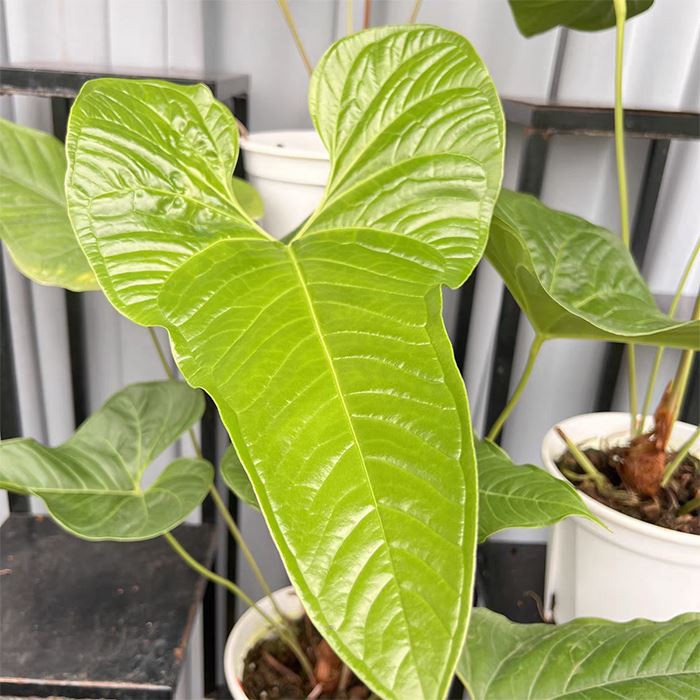

Anthurium Draconopterum Plant Features
1. Foliage:
The leaves of Anthurium draconopterum are large, elongated, and deeply lobed, resembling the wings of a dragon, hence the name "draconopterum."
The leaves have a dark green color with distinct veins, which creates a striking contrast against the glossy surface.
The plant's leaves can grow up to 30–60 cm (12–24 inches) in length and 10–15 cm (4–6 inches) in width, giving the plant a bold, dramatic appearance.
2. Flowers:
Like other Anthurium species, A. draconopterum produces a spadix surrounded by a spath, a modified leaf that functions like a bract.
The flowers are typically **yellow-green** and may not be as prominent or showy as those of some other *Anthurium* varieties, but they still contribute to the overall tropical appeal of the plant.
The spadix is typically column-like and can grow several inches tall, surrounded by a white or light-colored spath.
3. Plant Morphology:
Overall Appearance: Anthurium draconopterum is an eye-catching plant that usually grows in medium to large sizes. The plant is generally 50 to 100 cm tall, with a relatively upright shape and a relatively strong stem that can support the lush leaves and flowers. Its growth posture gives people a sense of vitality and momentum.
Rhizome: The rhizome is thick and fleshy, which is an important part for storing nutrients and water. Its root system is well-developed, consisting of many fleshy roots, which can penetrate deep into the soil and effectively absorb water and various essential nutrients, providing a solid foundation for the growth of the plant.
4. Leaf Characteristics:
Shape: The leaves are unique in shape, ranging from oblong to lanceolate, with obvious pinnate divisions. The length of the leaves is usually between 30 and 60 cm, and the width is about 10 to 20 cm. The split edges of the leaves are like dragon wings, with unique serrations or wavy undulations, which is also the origin of its specific epithet "Draconopterum". The leaves are gradually pointed at the top and heart-shaped or rounded at the base.
Color: The leaves are bright and varied in color. The front is mainly dark green with a metallic luster, as if shrouded in a layer of mysterious light, making it look very textured. The back is slightly lighter in color, mostly light green, and the color of the veins is slightly darker than the leaves themselves, highlighting the vein structure of the veins and increasing the ornamental value of the leaves.
Texture: The leaves are thick and have a certain leathery texture. This texture helps the leaves retain moisture and resist the influence of the external environment. The veins are clearly visible and are distributed in a feathery manner. The main veins are thick and extend from the base of the leaves to the top. The lateral veins are regularly divided from both sides of the main veins, which not only supports the leaves in structure, but also visually adds to the beauty of the leaves.
Anthurium Draconopterum Plant Size:
- Accepting tissue culture plantlet orders
-
The height of the plants and the flower pots can be made to your size
Anthurium Draconopterum Special Care or Planting instructions
- Light
This plant thrives in bright, indirect light. Direct sunlight can scorch its leaves, leading to brown spots or leaf burn.
A partially shaded area or a spot with dappled light is ideal for promoting healthy growth and vibrant foliage.
- Water
Water Anthurium draconopterum when the top inch of soil feels dry to the touch. It's important to water thoroughly, allowing water to drain through the pot's drainage holes.
Avoid overwatering, as the plant is sensitive to root rot. Ensure the soil is well-draining and does not retain excess water.
In the colder months (fall and winter), reduce watering frequency as the plant's growth slows.
- Humidity
- Being a tropical species, it thrives in high humidity environments, ideally 60% and above. If the air is too dry, the leaves can become crispy and edges may brown.
- Increasing the humidity around the plant using a humidifier, placing the plant on a moisture tray (a shallow tray filled with pebbles and water), or misting the plant lightly can help maintain a healthy level of moisture in the air.
- Temperature
- Anthurium draconopterum prefers warm conditions, with an ideal temperature range of 18°C to 28°C (65°F to 82°F).
- It should be kept in a place where temperatures do not drop below 15°C (59°F) to avoid cold stress or damage to the plant.
- Soil
This plant prefers well-draining soil. A peat-based potting mix with added perlite or bark is ideal to ensure good drainage and root aeration.
You can also use a cactus or orchid mix, as Anthuriums in general benefit from slightly acidic soil that mimics their natural habitat.
- Fertilizing
During the growing season (spring and summer), feed the plant with a balanced, water-soluble fertilizer every 4-6 weeks.
Reduce feeding in fall and winter, as the plant is less actively growing during these months.
Over-fertilizing can lead to leaf burn, so be cautious not to overdo it.
- Common Problems and Solutions
1. Yellowing Leaves:
Cause: Overwatering, poor drainage, or insufficient light.
Solution: Make sure the plant's soil drains well and is not staying soggy. Ensure it is receiving adequate indirect light.
2. Brown Leaf Tips:
Cause: Low humidity or underwatering.
Solution: Increase the humidity around the plant by misting it or using a humidifier. Ensure the plant's soil remains moist but not soggy.
3. Leaf Curling or Drooping:
Cause: Insufficient light or nutrient deficiencies.
Solution: Ensure the plant is receiving enough bright, indirect light and consider feeding it with a balanced fertilizer.
4. Pests:
Common pests that affect Anthurium draconopterum include mealybugs, aphids, and spider mites. Regularly check the undersides of the leaves for signs of pests.
Solution: Treat the plant with insecticidal soap or neem oil, and wipe the leaves down to remove pests.
Safety of Anthurium Draconopterum
Always keep it out of reach of children and animals.
Hot Tags: anthurium draconopterum, China anthurium draconopterum, Anthurium Clarinervium Plant, Anthurium Black Love, anthurium plant, Anthurium Flamingo Pink, Anthurium Superbum Bird s Nest, Anthurium White Flamingo


