




Gymnocalycium saglionis variegated Cactus Features
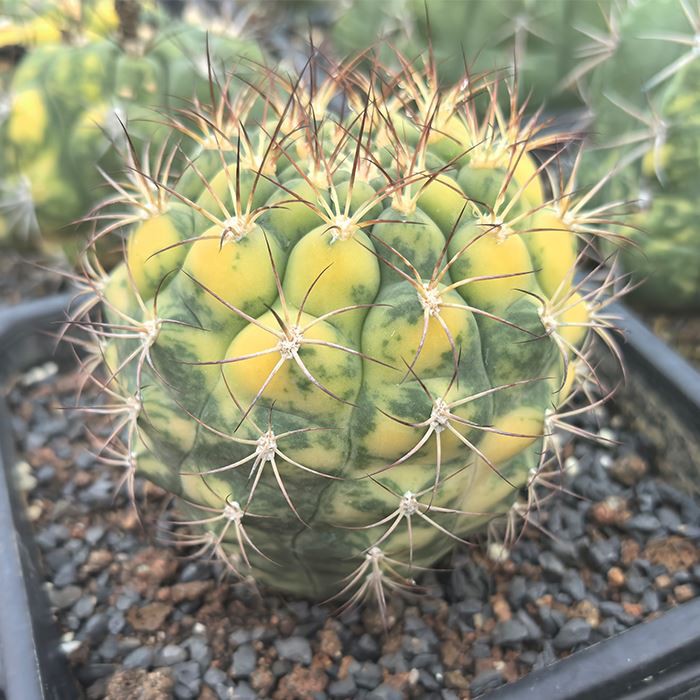
Size and Shape: Like the non-variegated form, the variegated Gymnocalycium saglionis can grow up to 12–24 inches (30–60 cm) in diameter, though variegated cacti tend to grow more slowly. It has a globular to slightly cylindrical shape.
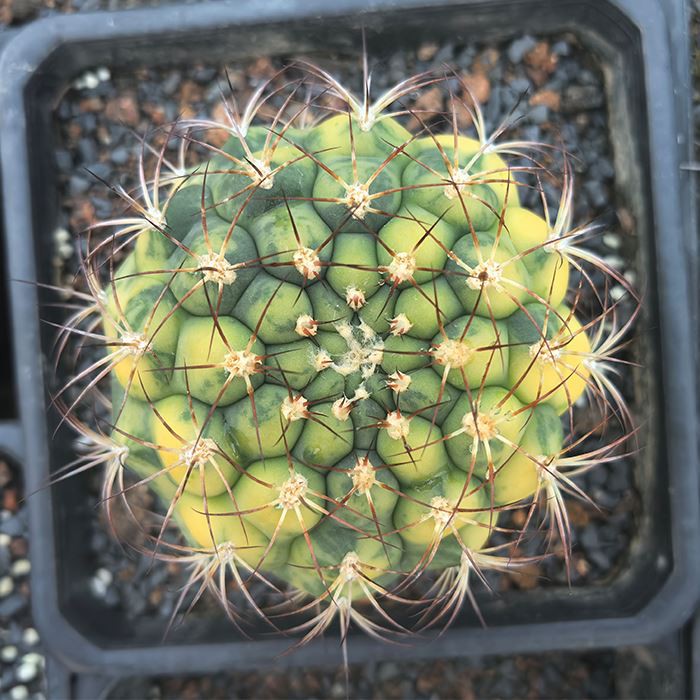
Body: The body is marked by variegation, which may manifest as streaks or patches of creamy white, yellow, or even pink interspersed with the plant's usual green color. The variegation patterns are often irregular, giving each plant a unique appearance. The body retains its ribbed structure with 10–15 pronounced ribs.
Spines: The spines in the variegated form remain long, strong, and slightly curved, much like in the standard species. They range in color from yellowish-brown to reddish-brown when young, fading to gray as they age. The contrast between the variegated body and the spines adds to the plant's aesthetic appeal.
Flowers: The variegated Gymnocalycium saglionis produces the same delicate, funnel-shaped flowers as the standard variety. The flowers range from white to pale pink and sometimes exhibit lavender hues. These flowers emerge from the top of the plant during spring and summer and are followed by small, green fruits.
Gymnocalycium saglionis variegated Cactus Size:
- Potted in a 12-20 cm pot
-
The height of the plants and the flower pots can be made to your size.
Gymnocalycium saglionis variegated Cactus Special Care or Planting instructions
- Light
The variegated form requires bright light but may need protection from intense direct sunlight, which could burn the variegated sections. Providing indirect or filtered sunlight can help maintain the vibrant colors without causing sunburn
- Water
Water thoroughly during the growing season (spring and summer), but allow the soil to dry out completely between waterings. In the winter, reduce watering, as the plant is more prone to rot when it is dormant. Variegated cacti are often more sensitive to overwatering, so err on the side of caution.
- Soil
Use well-draining soil, such as a cactus or succulent mix, amended with sand or perlite to ensure good drainage. The variegated form, like all cacti, is sensitive to waterlogged soil, so proper drainage is essential.
- Temperature
Gymnocalycium saglionis variegated prefers warm temperatures and should be protected from frost. While it can tolerate cooler temperatures briefly, it should not be exposed to temperatures below 25°F (-4°C). During the growing season, it thrives in temperatures between 70–85°F (21–29°C).
- Propagation
Propagating variegated cacti can be challenging, as they are typically grown from seed or grafted to ensure the variegation is preserved. Variegated plants are generally slower-growing and may require more attention than their non-variegated counterparts.
- Growth Rate
The variegated form of *Gymnocalycium saglionis* is slower-growing than the non-variegated version due to the reduced chlorophyll in the variegated sections, which limits its ability to photosynthesize. Despite this slower growth, the plant can still reach a significant size over time with proper care.
- Pests and Diseases
As with other cacti, the variegated form can be susceptible to pests like mealybugs and spider mites. Regularly inspect the plant for signs of infestation and treat it with insecticidal soap or neem oil as necessary. Overwatering is a significant risk for variegated cacti, so it's essential to maintain a careful watering schedule.
Hot Tags: gymnocalycium saglionis variegated, China gymnocalycium saglionis variegated, cactus grafting shape, calathea plant, Gymnocalycium Baldianum Variegated, Crown Of The Thorns Plant, Consolea Rubescens Cactus, Pelecyphora Aselliformis F Cristata


