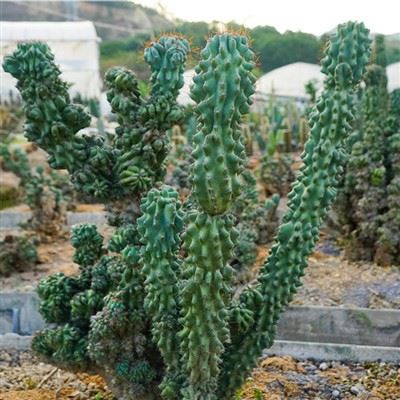
Opuntia polyacantha cactus Features
Morphology: The palmate stems are flat and come in a variety of colors, including blue, green, and may have pink or yellow flowers.
Spines: The cactus has two types of spines on the areoles: larger spines with 0-3 per areole, yellow to gray-brown, about 20-35 mm long; smaller spines with 0-5 per areole, white, about 5-10 mm long.
Flowers and Fruits: Bright yellow, pink or red flowers bloom from spring to summer, followed by purple fruits.
Opuntia polyacantha cactus Size:
- Opuntia polyacantha is a perennial, low-growing, shrubby cactus that grows about 10-20 cm tall and usually forms small clumps or mats up to 2-3 meters wide.
Opuntia polyacantha cactus Special Care or Planting instructions
- Light
Opuntia polyacantha thrives in bright sunlight, with full sun preferred for mature plants. When grown indoors, it should receive as much direct sunlight as possible, with a west- or south-facing window being a good choice
- Water
This cactus thrives in conditions that simulate its natural arid habitat, so it requires a well-drained soil mix to prevent root rot. It goes dormant in the winter, requiring less water and growth slows significantly
- Soil
It prefers well-drained soil, preferably a sandy or gravelly mix to mimic its natural desert habitat
- Fertilizer
At the start of the growing season in the spring, it can be fertilized with a balanced cactus fertilizer. Over-fertilization may result in weak growth and an increased risk of pests and diseases
- Propagation
It can be propagated by seed or stem cuttings. Cut the stem cutting and insert it into the soil after the cutting is dry, and it usually roots within 2 to 6 weeks
- Hardening
Opuntia polyacantha is hardy to UK planting zone 3, is frost-resistant, and is suitable for planting in USDA planting zones
- Pests and Diseases
Bird's Nest Anthurium can occasionally attract pests like spider mites, mealybugs, and scale. Common diseases include root rot due to overwatering and leaf spot diseases caused by fungal or bacterial infections. To prevent these issues, water your plant correctly and ensure it has good air circulation.
- Propagation
The easiest way to propagate Bird's Nest Anthurium is by division during repotting.
Hot Tags: plains prickly pear cactus opuntia polyacantha, China plains prickly pear cactus opuntia polyacantha, Sansevieria Trifasciata Whitney Plant, Blossfeldia Liliputana Cristata, Alocasia Zebrina Plant, Anthurium Flamingo Pink, Opuntia Robusta Giant, Astrophytum Myriostigma Cv Fukuryu