

Anthurium Warocqunanum Plant Features
Foliage:
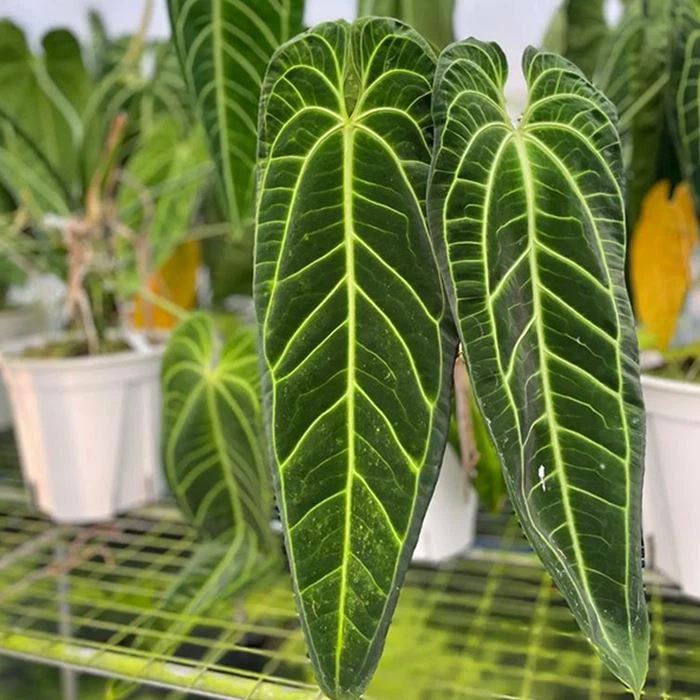
The leaves of Anthurium warocqueanum are its most striking feature. They are large, elongated, and heart-shaped, with prominent veining that creates a distinctive pattern.
The leaves are typically a dark green with a velvety texture that gives them an almost shimmering appearance in the right light.
The leaf size can vary, but mature leaves can reach up to 24 inches (60 cm) in length, making this plant quite impressive in size.
The veining is white or silver in contrast to the green leaf surface, adding to the plant's unique aesthetic.
Flowers:
Like most Anthurium species, A. warocqueanum produces the typical spathe and spadix flowers, although they are not the main attraction.
The spathe is typically white or greenish, and the spadix is yellow, although these are relatively small and subtle compared to the plant's stunning foliage.
Growth Habit:
Anthurium warocqueanum is an epiphytic plant, meaning it grows naturally in trees and uses its aerial roots to gather nutrients from the air and moisture from rainfall.
In cultivation, it requires a well-draining substrate and should not be left in waterlogged conditions.
It has a relatively slow growth rate but can eventually become a large specimen with proper care.
Anthurium Warocqunanum Plant Size:
- Accepting tissue culture plantlet orders
-
The height of the plants and the flower pots can be made to your size
Anthurium Warocqunanum Special Care or Planting instructions
- Light
This plant thrives in bright, indirect light. Direct sunlight can scorch the leaves, so it's best to place it in an area where it receives filtered light or dappled sunlight.
It can tolerate lower light levels but may not grow as vigorously or produce its best foliage under those conditions.
- Temperature
Anthurium warocqueanum is a tropical plant and prefers warm conditions. The ideal temperature range is 65°F to 80°F (18°C to 27°C).
It is sensitive to cold and should be protected from temperatures below 50°F (10°C), as exposure to cold can cause leaf damage.
- Humidity
As a tropical epiphyte, A. warocqueanum requires high humidity to thrive, ideally 60% to 80% or higher.
To provide adequate humidity, consider using a humidifier, placing the plant on a humidity tray, or regularly misting the plant, especially during dry winter months.
The more humid the environment, the healthier and more vibrant the foliage will appear.
- Watering
Water Anthurium warocqueanum when the top one to two inches of soil are dry. It's important not to let the plant sit in water, as root rot can develop in waterlogged conditions.
The plant likes to be kept evenly moist, but not soaked. Be sure the pot has proper drainage to prevent water from accumulating at the bottom.
During the cooler months, reduce watering frequency as the plant's growth slows down.
- Soil
Being an epiphyte, A. warocqueanum prefers a well-draining mix. A mix designed for orchids or other epiphytic plants, containing components like bark, perlite, and peat, works well.
Alternatively, you can use a tropical houseplant mix with added perlite to improve drainage.
- Fertilizing
During the growing season (spring and summer), Anthurium warocqueanum benefits from regular feeding with a balanced liquid fertilizer.
Use a diluted solution (half strength) and apply every 4-6 weeks.
Avoid fertilizing in the fall and winter when the plant is dormant, as this can lead to salt buildup in the soil.
- Common Problems and Solutions
Yellowing or Browning Leaves:
Cause: Overwatering or poor drainage.
Solution: Ensure the plant is in a well-draining pot and that the soil is allowed to dry out slightly between waterings. Avoid letting the plant sit in water.
Leaf Curling or Brown Tips:
Cause: Low humidity or underwatering.
Solution: Increase humidity around the plant with a humidifier or by misting. Make sure the plant is watered regularly, but allow the soil to dry out slightly between waterings.
Pests:
Cause: Aphids, mealybugs, spider mites, and scale insects can be a concern for Anthurium warocqueanum.
Solution: Inspect the plant regularly and treat any infestations with neem oil or insecticidal soap.
Safety of Anthurium Warocqunanum
Always keep it out of reach of children and animals.
Hot Tags: anthurium warocqunanum, China anthurium warocqunanum, Cactus Moon Grafted, Agave Titanota White Ice, Gymnocalycium Schickendantzii, cactus column, peperomia plant, Myrtillocactus Geometrizans Cristata Cactus