


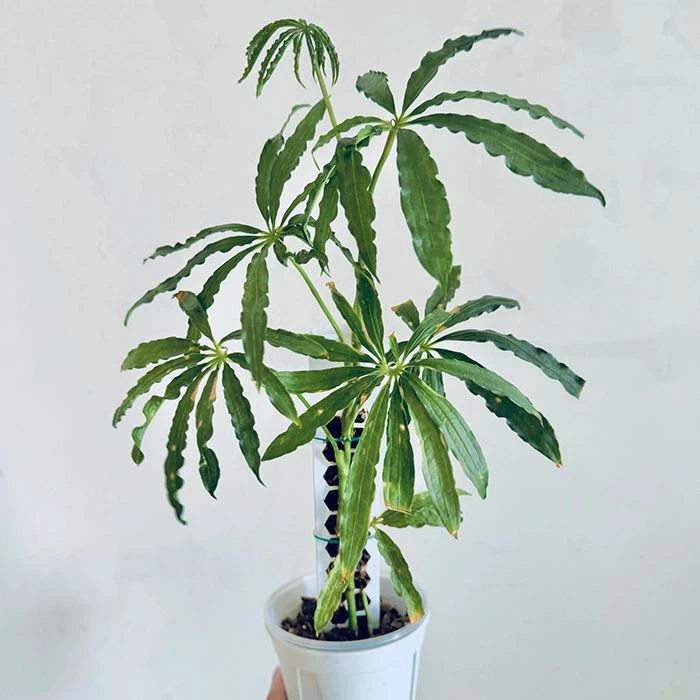

Anthurium Polydactylum Plant Features
Foliage:
The most striking feature of Anthurium polydactylum is its highly segmented leaves. The leaves have deep lobes that are elongated and narrow, giving them a finger-like or palmate appearance, which is how the species gets its name ("polydactylum" meaning "many fingers").
The leaves are typically dark green, with a glossy texture that gives them a lustrous, shiny appearance.
Mature leaves can grow up to 12 inches (30 cm) in length, depending on growing conditions and the size of the plant.
Growth Habit:
Anthurium polydactylum is a climbing epiphyte, meaning it naturally grows by attaching itself to trees or other plants in its native environment. It will do best if given some form of support, such as a moss pole, to mimic its natural growing conditions.
The plant can also grow in pots, but may need some assistance to climb as it matures. In nature, it can form a dense clump of foliage if allowed to spread.
The plant has a moderate growth rate but will thrive in ideal conditions such as high humidity, warmth, and indirect light.
Flowers:
Like other Anthurium species, the flowers of Anthurium polydactylum consist of a spathe (a petal-like bract) and a spadix (the flower cluster on a stalk). The flowers are typically white or cream-colored, though the spathe can sometimes have a slight greenish tint.
The flowers are less prominent compared to the beautiful foliage, but they still provide an attractive addition when in bloom.
Anthurium Polydactylum Plant Size:
- Accepting tissue culture plantlet orders
-
The height of the plants and the flower pots can be made to your size
Anthurium Polydactylum Special Care or Planting instructions
- Light
Anthurium polydactylum prefers bright, indirect light, but can tolerate moderate light levels. It should not be exposed to direct sunlight, as this can cause leaf burn.
In low light, the plant will grow more slowly and may not develop its full potential, particularly in terms of leaf size and color.
A location with filtered light (such as near a window with sheer curtains) is ideal for this species.
- Temperature
Being a tropical plant, Anthurium polydactylum thrives in warm temperatures between 65°F and 80°F (18°C - 27°C).
It should be kept in a warm environment and protected from cold drafts and temperatures below 50°F (10°C), as this can stunt growth or damage the plant.
- Humidity
Anthurium polydactylum thrives in high humidity and will do best in an environment with 60-80% humidity.
To maintain high humidity, you can place the plant on a humidity tray, use a humidifier, or regularly mist the leaves.
In dry conditions, the plant may suffer from leaf tip browning or slow growth, so additional care to maintain moisture is crucial.
- Watering
Water the plant when the top inch of the soil feels dry. Anthurium polydactylum prefers moist soil but does not tolerate standing water. Ensure the plant's container has good drainage to prevent root rot.
It's important to water thoroughly, allowing water to drain out of the pot, ensuring the roots are evenly hydrated.
During the winter months, you can reduce watering slightly, as the plant's growth slows down.
- Soil
The plant prefers a well-draining, lightweight soil mix that retains some moisture. A peat-based mix with added perlite or bark is a good choice.
If you're growing the plant as an epiphyte, you can use a bark or orchid mix to promote aeration and root health.
- Fertilizing
During the growing season (spring and summer), feed Anthurium polydactylum with a balanced, water-soluble fertilizer diluted to half strength. Fertilize once a month to support healthy growth.
Avoid fertilizing during the fall and winter months when the plant is not actively growing.
- Common Problems and Solutions
Yellowing Leaves:
Cause: Overwatering, poor drainage, or nutrient deficiencies.
Solution: Ensure the plant is not sitting in water and that its container has proper drainage. Adjust watering habits and check soil conditions.
Brown Leaf Tips:
Cause: Low humidity or underwatering.
Solution: Increase humidity by using a humidity tray or misting the leaves. Keep the plant watered regularly, ensuring the soil is moist but not waterlogged.
Pests:
Cause: Aphids, mealybugs, or spider mites.
Solution: Inspect the plant regularly for pests. Treat with insecticidal soap or neem oil to control infestations.
Safety of Anthurium Polydactylum
Always keep it out of reach of children and animals.
Hot Tags: anthurium polydactylum, China anthurium polydactylum, Myrtillocactus Geometrizans Cristata Cactus, Neobuxbaumia Polylopha Seeds, Euphorbia Cooperi, Blossfeldia Liliputana Cristata, Clay Balls For Plant, Echinocereus Rigidissimus Crested


