Anthurium Vertichii Plant Features
Foliage:
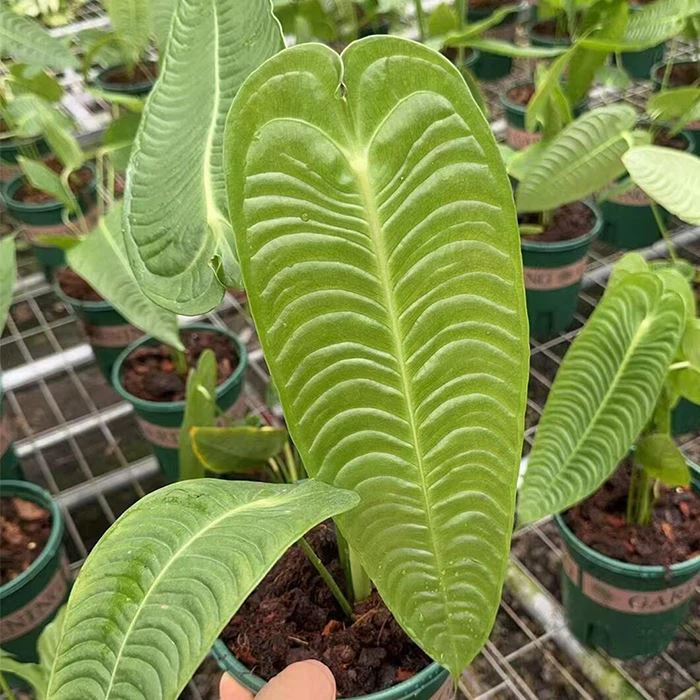
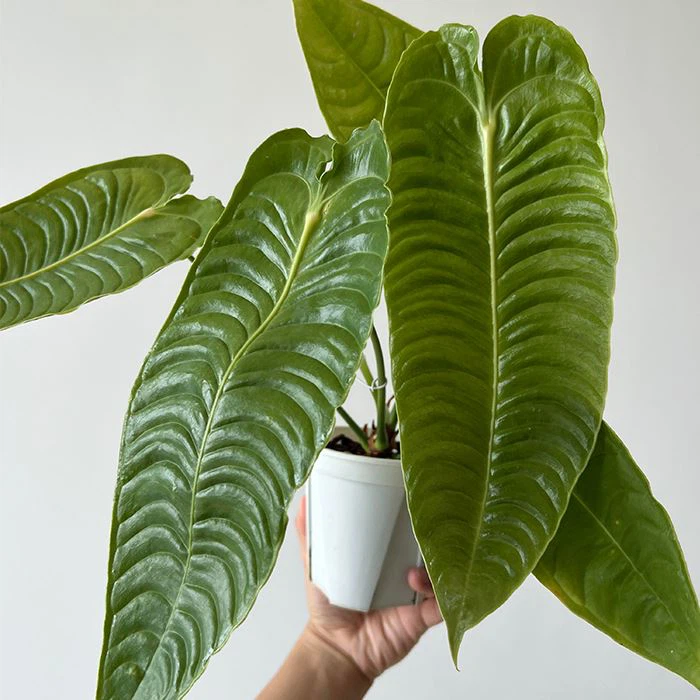
The leaves of Anthurium Vertichii are large, elongated, and glossy, with a deep green color.
One of the most notable characteristics of this species is its distinctive veining. The veins appear prominently across the leaves, creating a strong contrast between the smooth leaf surface and the textured veins.
The leaves can be quite large, often growing up to 12-18 inches (30-45 cm) long, and have an ovate or lance-shaped appearance.
The leaf margins are typically smooth, but the veins are quite pronounced, giving the plant a more sculptural look.
Flowers:
Anthurium Vertichii produces the classic spathe and spadix flowers typical of the Anthurium genus.
The spathe is typically white or light cream, and the spadix is yellow-green or cream-colored.
While the flowers are attractive, they are usually smaller in comparison to the foliage, and they are more subtle in appearance.
Growth Habit:
Like most Anthuriums, Vertichii is an epiphytic or terrestrial plant, meaning it can grow on trees or in the ground.
It can grow as a climbing plant or low-spreading ground cover, depending on the growing conditions and available support.
The plant's stems can become quite elongated, especially if provided with a structure for climbing, such as a moss pole or trellis.
Anthurium Vertichii Plant Size:
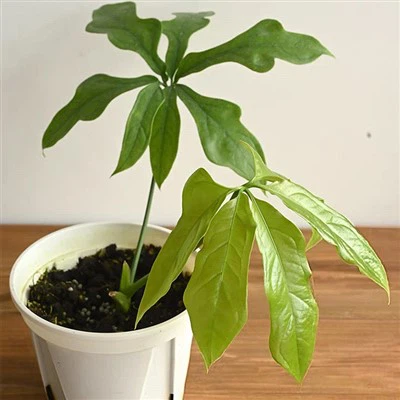
- Accepting tissue culture plantlet orders
-
The height of the plants and the flower pots can be made to your size
Anthurium Vertichii Special Care or Planting instructions
- Light
Anthurium Vertichii thrives in bright, indirect light. It can tolerate partial shade, but it will grow more slowly and have less vibrant foliage if exposed to low light conditions.
Direct sunlight should be avoided, as it can scorch the delicate leaves and cause burn marks.
- Temperature
The plant prefers warm temperatures, ideally between 65°F to 80°F (18°C to 27°C).
Anthurium Vertichii should be kept in a location that is not too drafty or exposed to sudden temperature drops.
It is best to keep this plant in a tropical environment, as it is sensitive to cold and should be protected from temperatures below 50°F (10°C).
- Humidity
Like many tropical plants, Anthurium Vertichii requires high humidity to thrive, ideally around 60-80%.
You can maintain humidity by placing the plant on a humidity tray, using a humidifier, or mist it regularly with water.
Dry air can cause the leaves to develop brown tips or edges, so it is important to keep the humidity levels consistent.
- Watering
Water the plant when the top 1-2 inches of soil become dry. The soil should be moist but not soggy, and water should drain freely from the pot.
In winter, when the plant's growth slows, it will need less frequent watering.
Avoid letting the plant sit in water, as this can lead to root rot.
- Soil
Anthurium Vertichii prefers a well-draining, aerated soil mix. A mix designed for tropical plants or orchids works well.
Use a combination of peat moss, perlite, and bark to create a loose, well-draining soil.
The plant's roots do not like to stay waterlogged, so ensure that the soil allows for proper drainage.
- Fertilizing
Feed Anthurium Vertichii with a balanced liquid fertilizer every 4-6 weeks during the growing season (spring and summer).
Reduce fertilizing during the winter months, when the plant's growth slows down.
Over-fertilizing can cause salt buildup and damage to the roots, so use fertilizer in moderation.
- Common Problems and Solutions
Yellowing Leaves:
Cause: Overwatering, poor drainage, or low light.
Solution: Ensure the plant is in well-draining soil, and water only when the top 1-2 inches of soil are dry. Also, make sure it's receiving sufficient indirect light.
Brown Leaf Tips:
Cause: Low humidity or underwatering.
Solution: Increase humidity around the plant by using a humidifier or placing the plant on a humidity tray. Make sure to water it properly.
Pests:
Cause: Mealybugs, aphids, and spider mites are common pests that can infest Anthurium Vertichii.
Solution: Inspect the plant regularly for pests, and treat with neem oil or an insecticidal soap if needed.
Safety of Anthurium Vertichii
Always keep it out of reach of children and animals.
Hot Tags: anthurium vertichii, China anthurium vertichii, Ferocactus Horridus V Brevispinus, Astrophytum Asterias Cv Kikkos Turtle Shell, Mammillaria Schiedeana Multi Headed Cactus, Mammillaria Humboldtii Large Cluster, Tillandsia Cyanea Flowering Plant, phalaenopsis plant