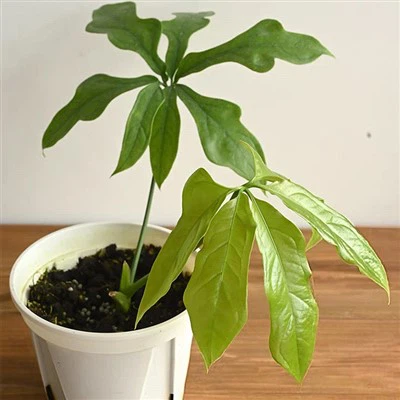
Anthurium Longissimilobum Plant Features
1. Foliage:
The most distinctive feature of Anthurium longissimilobum is its extremely long, slender leaves that can reach up to 2-3 feet (60-90 cm) in length. The leaves are typically narrow and lanceolate, giving the plant an elegant, grass-like appearance.
The leaf color is typically a deep green, with the surface being somewhat leathery and glossy.
The leaf veins are prominent, creating a textured effect, and they generally have a distinct vein pattern running along the length of the leaves.
2. Growth Habit:
Anthurium longissimilobum has a climbing or epiphytic growth habit in its native habitat, meaning it can grow on trees or rocks, using aerial roots to support itself. In cultivation, it is often grown in a pot with a support like a moss pole or trellis to mimic its natural growing conditions.
The plant forms compact rosettes of leaves, but it can grow quite tall and vining if provided with adequate support.
It is slow-growing, with each new leaf unfurling from the central crown of the plant.
3. Flowers:
As with other Anthuriums, it produces spadix-type flowers. The spadix is usually white or greenish and is surrounded by a modified leaf known as a spath. However, the flowers are not as ornamental as the foliage, which is typically the main attraction for plant collectors.
Flowering can occur during the growing season, but it is not always guaranteed in indoor environments.
Anthurium Longissimilobum Plant Size:
- Accepting tissue culture plantlet orders.
-
The height of the plants and the flower pots can be made to your size.
Anthurium Longissimilobum Special Care or Planting instructions
- Light
Anthurium longissimilobum thrives in bright, indirect light. It can tolerate low light but may not produce as many leaves or grow as vigorously.
Avoid placing the plant in direct sunlight, as this can cause the leaves to scorch, especially due to their long, narrow shape.
- Water
Water Anthurium longissimilobum when the top 1-2 inches of soil feels dry. Ensure that the pot has proper drainage, as the plant does not like to sit in stagnant water.
During the winter months, reduce watering slightly, as the plant's growth slows down. Always check the soil moisture before watering to prevent overwatering and root rot.
- Humidity
Like many tropical plants, Anthurium longissimilobum thrives in high humidity. Aim for 60-80% humidity for optimal growth. To increase humidity, you can mist the plant regularly, place it on a humidity tray, or use a **humidifier.
If the plant's leaves start to curl or show signs of brown edges, this is usually a sign of low humidity or dry air.
- Temperature
This species prefers warm temperatures, typically between 18°C and 27°C (65°F - 80°F).
Avoid exposing the plant to cold temperatures below 15°C (59°F), as it is sensitive to frost and may not survive in colder climates.
- Soil
This species prefers a well-draining, loose soil mix, typically a mix designed for epiphytic plants. A combination of peat, perlite, and orchid bark provides the right balance of moisture retention and drainage.
Alternatively, you can use a tropical plant mix or cactus mix, as long as it drains well and allows the roots to breathe.
- Fertilizing
During the growing season (spring and summer), feed the plant with a balanced liquid fertilizer diluted to about half strength. Fertilize every 4-6 weeks to encourage healthy foliage growth.
In the fall and winter, reduce fertilizing as the plant enters a dormant phase.
- Common Problems and Solutions
1. Yellowing Leaves:
Cause: Overwatering or poor drainage.
Solution: Ensure that the plant is in well-draining soil and only water when the soil is dry to the touch. Avoid letting the plant sit in water.
2. Brown Leaf Tips:
Cause: Low humidity or underwatering.
Solution: Increase humidity by misting the plant, placing it on a humidity tray, or using a humidifier. Water the plant when the top soil feels dry, but avoid overwatering.
3. Leaf Curling or Drooping:
-Cause: Environmental stress, such as extreme temperatures or low humidity.
Solution: Ensure the plant is kept in a location with consistent temperatures and high humidity. Keep it away from cold drafts and air conditioning units.
4. Pests:
Common pests include mealybugs, spider mites, and aphids
Solution: Regularly inspect the plant for pests and treat with neem oil or insecticidal soap if infestations are detected.
Safety of Anthurium Longissimilobum
Always keep it out of reach of children and animals.
Hot Tags: anthurium longissimilobum, China anthurium longissimilobum, Neobuxbaumia Polylopha Seeds, monstera plant, The Dragon Boat Flower Plant Ixora Chinensis, Agave Burnt Burgundy , Large Golden Barrel Cactus, Gymnocalycium Bodenbenderianum