


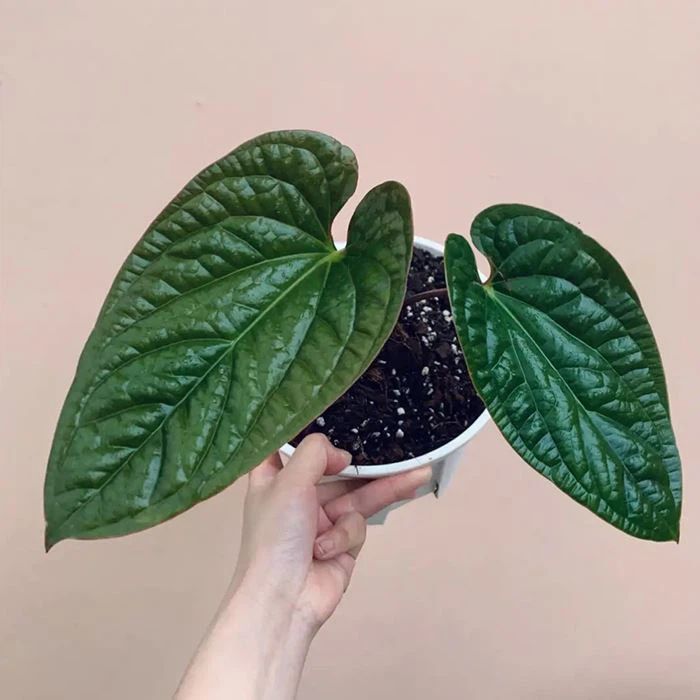

Anthurium Radicans Plant Features
Foliage:
Anthurium radicans has long, narrow leaves that can range from 5 to 10 inches (12-25 cm) in length. The leaves are typically deep green and have a leathery texture.
The plant's leaves are elongated and somewhat wavy, which gives the plant a graceful, trailing appearance.
As it matures, the plant may produce larger leaves with more pronounced waves and lobe-like structures.
Flowers:
Like other Anthuriums, Anthurium radicans produces the typical spadix surrounded by a spathe, though its flowers are generally less showy than the larger, more ornamental varieties of Anthurium.
The flowers are typically white or greenish, with the spadix growing upward, surrounded by a greenish or whitish spathe.
The flowers are less conspicuous but still form a neat and attractive display, especially when the plant is allowed to climb or sprawl.
Growth Habit:
Anthurium radicans is a climbing epiphyte that naturally grows by attaching itself to trees and other supports in its native habitat.
As it grows, it develops long, vining stems that can be trained to climb a trellis or cascade down a hanging container. It can also be allowed to grow as a trailing plant.
This growth habit gives the plant a unique, sculptural appearance, especially when used in hanging baskets or vertical gardens.
Anthurium Radicans Plant Size:
- Accepting tissue culture plantlet orders
-
The height of the plants and the flower pots can be made to your size
Anthurium Radicans Special Care or Planting instructions
- Light
Anthurium radicans prefers bright, indirect light. It can tolerate lower light levels but may not grow as vigorously.
Direct sunlight should be avoided, as it can cause leaf burn. Ideally, place the plant near a window with filtered light or in a bright room with access to indirect sunlight.
- Temperature
Being a tropical plant, Anthurium radicans thrives in warm temperatures, generally between 65°F and 80°F (18°C - 27°C).
It is sensitive to cold and should be kept away from temperatures below 50°F (10°C). Avoid placing it in areas with cold drafts.
- Humidity
Anthurium radicans thrives in high humidity (around 60-80%), so it's a good idea to mist the plant or place it on a humidity tray.
If the humidity in your home is too low, you may also consider using a humidifier to maintain the proper moisture levels.
- Watering
Water Anthurium radicans when the top inch of soil feels dry. It prefers slightly moist soil, but it doesn't like to be overwatered, as this can lead to root rot.
Ensure the plant is in a well-draining soil mix to prevent water from accumulating at the roots. Water thoroughly, but make sure to empty the saucer after watering to avoid standing water.
- Soil
A well-draining, lightweight soil mix is ideal for Anthurium radicans. A mixture designed for epiphytic plants-such as a peat-based mix combined with perlite or bark-works well.
Ensure the soil provides good drainage and doesn't retain excessive moisture, as this can lead to root problems.
- Fertilizing
During the growing season (spring and summer), fertilize once a month with a balanced liquid fertilizer diluted to half strength.
In fall and winter, reduce fertilization as the plant's growth slows down.
- Common Problems and Solutions
Yellowing Leaves:
Cause: Overwatering or nutrient deficiency.
Solution: Ensure that the plant's soil is well-draining, and allow the top inch of soil to dry out before watering again. Ensure you're not overwatering, and check for good drainage.
Brown Leaf Tips:
Cause: Low humidity or underwatering.
Solution: Increase humidity levels or water more frequently to keep the soil slightly moist.
Pests:
Cause: Mealybugs, aphids, and spider mites are common pests on Anthurium plants.
Solution: Regularly inspect the plant for pests. If detected, treat with neem oil, rubbing alcohol, or insecticidal soap.
Safety of Anthurium Radicans
Always keep it out of reach of children and animals.
Hot Tags: anthurium radicans plant, China anthurium radicans plant, Anthurium Black Love, anthurium plant, Anthurium Clarinervium Plant, Anthurium Flamingo Red, Anthurium Superbum Bird s Nest, Anthurium Flamingo Pink


