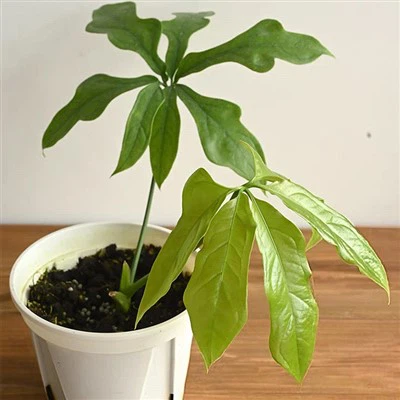
Anthurium Modeanum Plant Features
1. Foliage:
The leaves of Anthurium modeanum are large, elongated, and arrow-shaped. They can grow up to 2 feet (60 cm) long and around 8 inches (20 cm) wide, giving the plant a bold and impressive appearance.
The surface of the leaves is smooth and has a leathery texture. The leaves are a deep, dark green, and they often feature distinctive, prominent veins that form a beautiful contrast against the rich leaf color.
The veins are typically lighter, ranging from pale green to silver, and the veins often have a net-like appearance, adding to the plant's allure.
2. Size and Growth Habit:
Anthurium modeanum is a moderately sized plant, typically growing up to 3 feet (90 cm) tall and wide, depending on the growing conditions.
It has a clumping growth habit, with multiple leaves emerging from a central point, and the leaves are held upright, forming a compact, bushy rosette.
The plant grows slowly, especially when compared to other tropical species, but over time, it can become quite large and majestic.
3. Flowers:
Like other Anthuriums, A. modeanum produces the classic spadix and spathe flower structure. The flowers are typically white or light green, with the spadix (the central flower spike) protruding from the spathe (the surrounding modified leaf).
However, the flowers are usually secondary to the plant's impressive foliage, and it is the leaves that make this plant especially popular among collectors.
Anthurium Modeanum Plant Size:
- Accepting tissue culture plantlet orders
-
The height of the plants and the flower pots can be made to your size
Anthurium Modeanum Special Care or Planting instructions
- Light
Anthurium modeanum thrives in bright, indirect light. It can tolerate lower light conditions, but growth will be slower, and the plant may not show the same vibrancy in its foliage.
Avoid direct sunlight, which can scorch the delicate leaves and cause them to turn yellow or brown.
- Water
Water Anthurium modeanum when the top 1-2 inches of soil are dry to the touch. Be sure to water thoroughly, allowing the water to drain through the bottom of the pot.
In the winter months, reduce watering, as the plant's growth slows. Overwatering can lead to **root rot**, so it is essential to allow the soil to dry slightly between waterings.
Ensure the pot has drainage holes to prevent water from sitting at the bottom of the container, which could damage the roots.
- Humidity
Anthurium modeanum thrives in high humidity levels, typically around 60-80%. In lower humidity, the plant's leaves may show signs of brown edges or crispy tips.
To increase humidity, consider using a humidifier, placing the plant on a humidity tray, or regularly misting the leaves. Alternatively, grouping the plant with other humidity-loving plants can create a more favorable microclimate.
- Temperature
This plant prefers warm temperatures between 65°F and 85°F (18°C - 29°C). It does not tolerate cold temperatures and should be kept away from cold drafts.
Ideal temperatures for growth are consistently warm, making it a great choice for tropical indoor environments.
- Soil
Anthurium modeanum prefers well-draining, slightly acidic soil. A mix designed for tropical or epiphytic plants, such as a combination of **peat, perlite, and orchid bark, will work well.
Avoid using soil that retains too much moisture, as this can lead to root rot. You can amend regular potting soil with extra perlite or sand to improve drainage.
- Fertilizing
During the growing season (spring and summer), feed the plant with a balanced liquid fertilizer diluted to half strength. This will promote vigorous growth and encourage the development of strong, healthy foliage.
Reduce fertilizing in winter when the plant is in a resting phase. Over-fertilizing can lead to salt buildup in the soil, which can harm the roots.
- Common Problems and Solutions
1. Yellowing Leaves:
Cause: Overwatering or nutrient deficiency.
Solution: Make sure the plant is in well-draining soil and is not sitting in stagnant water. If yellowing persists, try increasing **nutrient levels** by fertilizing the plant with a balanced fertilizer.
2. Brown Leaf Tips:
Cause: Low humidity or underwatering.
Solution: Increase humidity around the plant by misting, using a humidity tray, or employing a humidifier. Ensure that you are watering the plant properly-avoid letting it dry out completely for extended periods.
3. Pests:
Common pests that can affect Anthurium modeanum include mealybugs, scale, and spider mites.
Solution: Treat infestations with insecticidal soap, neem oil, or a mild soap-and-water solution. Regularly inspect the plant for pests and remove any affected leaves.
Safety of Anthurium Modeanum
Always keep it out of reach of children and animals.
Hot Tags: Anthurium Modeanum, China Anthurium Modeanum, Myrtillocactus Geometrizans F Cristata, Ferocactus Emoryi Covillei, Bromeliad Cryptanthus Plant, Astrophytum Asterias Super Kabuto , begonia plant, Discocactus Bahiensis Subs Subviridigriseus