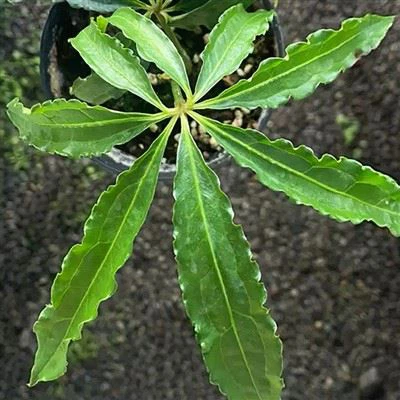
Anthurium OklaHoma Plant Features
Foliage:
The leaves of Anthurium 'Oklahoma' are large, glossy, and heart-shaped, with a smooth, slightly rounded surface.
The rich green color of the leaves makes the plant highly decorative, and the texture gives it a lush, velvety appearance.
The plant tends to have moderately sized leaves, usually around 10 to 15 inches long, with a rich dark green coloration that adds an elegant touch to any space.
Flowers:
Like most Anthuriums, 'Oklahoma' produces spadix and spathe flowers, though it is not primarily grown for its blooms.
The spathe is typically a white to pale green, with the spadix being the more distinctive feature, with a yellow or pale greenish hue.
Flowering can occur periodically throughout the year, especially if the plant is grown in optimal conditions, but the flowers are often less emphasized than the beautiful foliage.
Growth Habit:
This plant is compact and typically grows to about 1 to 2 feet (30 to 60 cm) in height, making it suitable for both larger indoor spaces and smaller, more confined environments.
It has a mounding growth habit, with leaves spreading out symmetrically from the base.
Anthurium OklaHoma Plant Size:
- Accepting tissue culture plantlet orders
-
Pot:12cm-17cm
-
Hight:30cm-60cm
-
The height of the plants and the flower pots can be made to your size
Anthurium OklaHoma Special Care or Planting instructions
- Light
Light Requirements: Anthurium Oklahoma likes bright indirect light and should avoid strong direct sunlight. It can be placed near a window indoors with a curtain for shading, or in a shaded area outdoors, to ensure that it receives 4 to 6 hours of indirect light per day. Such lighting conditions can ensure the healthy growth of the plant and maintain the vivid colors of the leaves and flowers.
Effects of Excessive or Insufficient Light: If the light is too strong, for example, if the plant is exposed to direct sunlight for a long time, the leaves may be burned, with yellow or brown spots appearing, and the color of the spathe may also fade. On the contrary, if the light is insufficient, the plant may grow slowly, the lives of the leaves may become dull, the number of flowers may decrease, and the flowers themselves may become smaller, affecting the ornamental effect.
- Temperature
Suitable Temperature Range: It is suitable for growing in a warm environment, and the ideal growth temperature is between 20 and 28°C. Within this temperature range, various physiological activities of the plant, such as photosynthesis and respiration, can be carried out normally, which is helpful for the healthy growth of the plant and the normal opening of the flowers.
Cold and Heat Tolerance: Its cold tolerance is relatively weak. When the temperature is lower than 15°C, the growth rate of the plant will slow down significantly. If the temperature is lower than 10°C for a long time, it may cause the plant to be damaged by frost, with withered leaves and faded flowers. In terms of heat tolerance, it can tolerate a certain degree of high temperature, but when the temperature exceeds 32°C, appropriate cooling measures should be taken, such as strengthening ventilation, to avoid adverse effects on the plant caused by high temperature.
- Water
Watering Principle: It is necessary to maintain a moderately humid environment, but avoid waterlogging. Watering should follow the principle of "water when the surface of the soil is slightly dry". That is, wait until the surface of the soil is slightly dry before watering, and water thoroughly each time to ensure that the water can fully penetrate to the bottom of the soil so that the roots can fully absorb the water.
Watering Frequency: In the growth season (spring and autumn), generally water 2 to 3 times a week; in summer, due to the high temperature and fast water evaporation, the need to increase the watering frequency appropriately, watering about 3 to 4 times a week; in winter, the plant grows slowly and the demand for water decreases, watering once every 2 to 3 weeks is sufficient. However, the watering frequency also needs to be adjusted according to the actual environmental conditions (such as air humidity, pot size, soil drainage, etc.).
- Soil
Soil Requirements: It requires loose, breathable, well-drained soil rich in humus. The soil can be prepared by mixing peat moss, perlite, and decomposed leaf soil in a different order. Peat moss can provide good water retention and certain nutrients, perlite can increase the air permeability of the soil, and decomposed leaf soil is rich in humus, which helps to improve the soil structure and provide comprehensive nutrition for the plant.
Soil Replacement Frequency: Generally, replace the soil once every 1 to 2 years, and it is better to do it in spring. Replacing the soil can update the nutrients in the soil and improve the physical properties of the soil, providing a more suitable growth environment for the plant. During the soil replacement process, be careful to avoid damaging the roots of the plant.
- Fertilization
Fertilization Timing and Fertilizer Selection: In the growth season (spring and autumn), apply a thin liquid fertilizer once a month. You can choose a fertilizer specifically formulated for Araceae plants or use a general fertilizer containing major elements such as nitrogen, phosphorus, and potassium. When fertilizing, dilute according to the instructions on the fertilizer package, generally with a dilution factor of 1000 to 1500 times, to avoid harming the plant due to excessive fertilizer concentration.
Fertilization Precautions: When fertilizing, be careful not to let the fertilizer touch the leaves and flowers, especially not to let the fertilizer remain on the spathe, otherwise it may burn the leaves and flowers. In winter, when the plant grows slowly or enters a dormant state, fertilization should be stopped to avoid the accumulation of fertilizer in the soil and having an adverse effect on the plant.
Safety of Anthurium OklaHoma
Always keep it out of reach of children and animals.
Hot Tags: anthurium oklahoma, China anthurium oklahoma, Anthurium Superbum Bird s Nest, Anthurium White Flamingo, Anthurium Flamingo Pink, Anthurium Black Love, Anthurium Flamingo Red, anthurium plant