

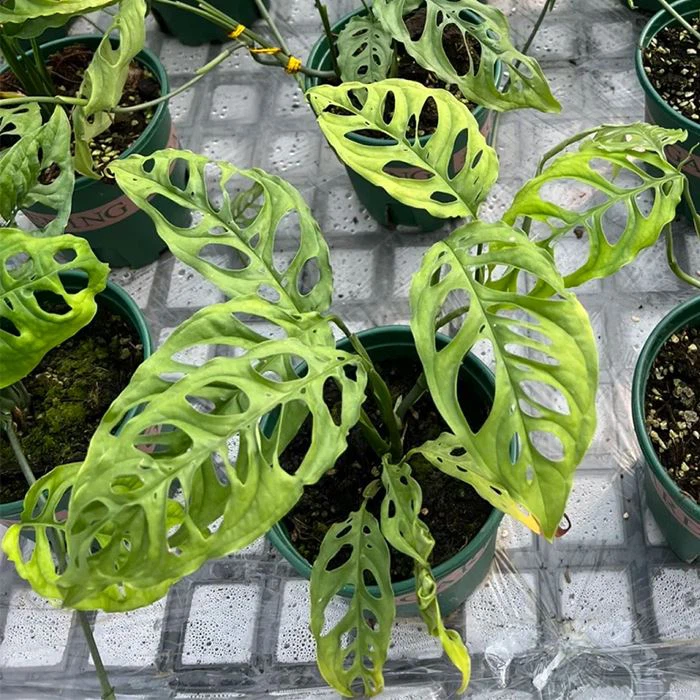


Monstera Obliqua Plant Features
Foliage: The most striking feature of Monstera Obliqua is its dramatic foliage. The leaves are thin, almost transparent, and have more open space than leaf material due to the extensive fenestration, which gives it a lace-like appearance
Native Habitat: Native to the tropical forests of Central and South America, Monstera Obliqua thrives under the canopy of dense jungles where humidity is high and light is dappled
Size: When grown indoors, Monstera Obliqua can reach up to 4-5 feet in height and 2-3 feet in spread, depending on the support provided for its climbing habit. Outdoors, it can grow 6-10 feet tall
Growth Habit: This is a slow-growing, evergreen trailing shrub. In the wild, it uses aerial roots to attach itself to larger trees, gradually climbing towards the canopy to access more light
Flowers: The plant produces inflorescences typical of the Araceae family, featuring a spadix surrounded by a creamy-yellow spathe. These flowers are a rare sight in domestic cultivation
Hardiness: Monstera Obliqua is hardy in USDA zones 10-12, thriving in warm, humid conditions
Monstera Obliqua Plant Size:
- Accepting tissue culture plantlet orders
-
Pot:9cm-18cm
-
Hight:10cm-50cm
-
The height of the plants and the flower pots can be made to your size
Monstera Obliqua Special Care or Planting instructions
- Light
Monstera Obliqua prefers bright, indirect sunlight to thrive. Direct sunlight can scorch its leaves, while too little light may reduce leaf perforations and growth. An east or west-facing window providing filtered light is ideal for this tropical plant
- Soil
Use a peat-based potting mix with perlite or sand to improve drainage. Monsteras prefer slightly acidic to neutral pH
- Water
Water when the top inch of soil feels dry. Monsteras like evenly moist soil but not soggy. Reduce watering in winter
- Temperature and Humidity
Ideal temperatures range from 68°F to 86°F (20°C to 30°C). Avoid exposure to temperatures below 50°F (10°C), as cold can damage the plant. Thrives in humidity levels of 80% or higher. Use a humidifier or mist the leaves regularly to increase humidity, especially in dry environments
- Fertilization
Apply a balanced, water-soluble fertilizer monthly during the growing season (spring through summer). Fertilize it once a month using a mild fertilizer in small amounts during the spring and summer months. In the winter, it is advisable to let the plant rest to avoid any salt buildup in the soil, injuring the plant's foliage and causing it to burn
- Pruning
Prune in spring or early summer to maintain size and shape. Remove any yellow or damaged leaves to encourage new growth
- Cleaning
Dust the leaves occasionally with a damp cloth to ensure the plant can photosynthesize efficiently. This also keeps the plant looking its best
- Repotting
Repot every 2-3 years or when the plant becomes rootbound. Choose a pot 1-2 inches larger in diameter than the current one
Safety of obliqua monstera
Keep away from pets and children.
Hot Tags: obliqua monstera, China obliqua monstera, Epithelantha Bokei F Cristata, Cactus Euphorbia Tirucalli, Anthurium White Flamingo, hanging plant, Tillandsia Cyanea Flowering Plant, Gymnocalycium Anisitsii Cristata Variegata


