


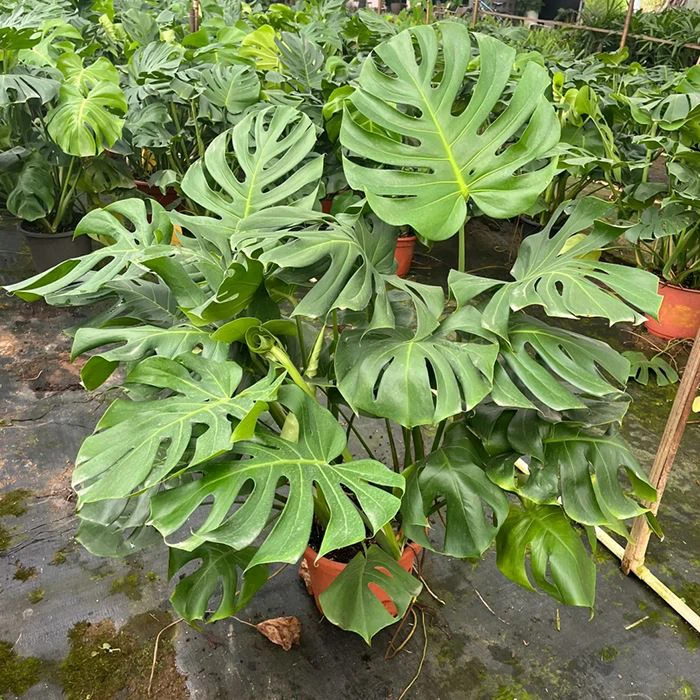
Monstera deliciosa Plant Features
Foliage:
The leaves of Monstera plants are typically large, leathery, and can grow up to 3 feet (1 meter) long in mature plants.
The most distinctive feature is the perforations or "holes" in the leaves, a characteristic that gives them their common name. This pattern develops as the plant matures and is thought to help the plant survive in its natural habitat by allowing the wind to pass through the leaves, reducing the risk of damage during storms.
Young plants may have solid leaves without holes, but as the plant grows and matures, the perforations appear.
Growth Habit:
Monstera plants are vining or climbing plants, meaning they naturally grow by attaching themselves to nearby structures or trees in their native tropical environments.
In homes, they often benefit from being supported with a moss pole or trellis to help them climb and thrive.
They can reach impressive heights of up to 10 feet (3 meters) or more when supported, though they tend to grow more slowly indoors.
Flowers and Fruit:
Monstera plants are rarely seen flowering in indoor settings. However, when they do bloom, they produce a spathe and spadix (similar to other plants in the Anthurium genus), although this is not a common occurrence.
Some species, such as Monstera deliciosa, produce edible fruit after flowering, which resembles a cross between a pineapple and a banana. The fruit is only safe to eat once fully ripe.
Monstera deliciosa Plant Size:
- Accepting tissue culture plantlet orders
-
Pot:12cm-17cm
-
Hight:30cm-50cm
-
The height of the plants and the flower pots can be made to your size
Monstera deliciosa Special Care or Planting instructions
- Light
Monstera plants thrive in bright, indirect light. They can tolerate low light but will grow more slowly, and the leaves may become smaller and less perforated.
Direct sunlight can cause the leaves to burn, so it's important to place them in a location where they are shielded from the harsh midday sun.
- Temperature
Monstera plants prefer warm temperatures between 65°F to 85°F (18°C to 29°C).
They are sensitive to cold and should be kept away from drafts or temperatures below 50°F (10°C).
- Humidity
Monstera plants prefer high humidity and will grow best in areas with humidity levels around 60% or higher.
In dry climates, consider using a humidifier or placing the plant on a humidity tray to increase moisture around it.
- Watering
Water Monstera plants when the top 1-2 inches of soil feel dry. Be sure not to overwater, as this can lead to root rot.
During the winter months, you can reduce the watering frequency since the plant is in a dormant phase.
Ensure that the plant's pot has proper drainage to avoid water pooling at the bottom.
- Soil
Monstera plants prefer a well-draining, light potting mix, such as a peat-based mix with added perlite or orchid bark to improve aeration and drainage.
- Fertilizing
Fertilize during the growing season (spring and summer) with a balanced liquid fertilizer once a month. Reduce fertilization in the winter months, as the plant is not actively growing.
- Common Problems and Solutions
Yellowing Leaves:
Cause: Overwatering, underwatering, or insufficient light.
Solution: Check soil moisture regularly, ensure the plant is not sitting in water, and place it in a brighter location if necessary.
Brown Leaf Tips:
Cause: Low humidity or underwatering.
Solution: Increase the humidity around the plant or mist the leaves regularly to maintain moisture levels.
Pests:
Common pests that affect Monstera plants include mealybugs, scale, and spider mites. Inspect the leaves regularly for signs of pests.
Solution: Use insecticidal soap or neem oil to treat pest infestations.
Leggy Growth:
Cause: Insufficient light or lack of support for climbing.
Solution: Move the plant to a location with better light and provide a support structure, such as a moss pole or trellis, to encourage vertical growth.
Safety of Monstera deliciosa
Keep the plant out of reach of children and pets.
Hot Tags: monstera live plant, China monstera live plant, Guzmania Francesca, Adansonia Digitata Tree, calathea plant, Araucaria Cunninghamii Hoop Pine , Sansevieria Trifasciata Hahnii Plant, Espostoa Lanata Cactus


