


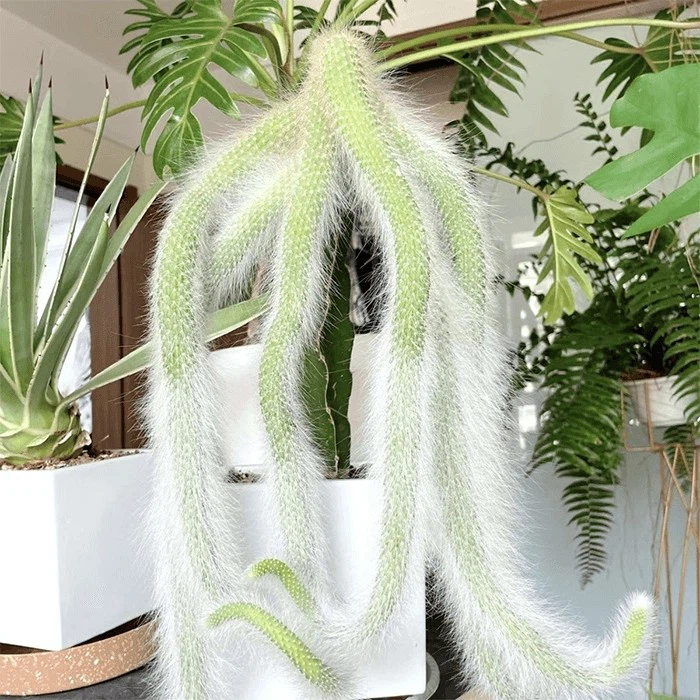


Monkey Tail Cactus Features
- Appearance
The Monkey Tail Cactus is named for its long, trailing stems that resemble a monkey's tail. The stems are cylindrical, segmented, and covered in dense white or golden spines
- Size
This cactus can grow up to several feet long, making it a great choice for hanging baskets or trailing over pots
- Flowers
In spring or early summer, it produces tubular, red or orange flowers along the stems, adding to its ornamental value
Monkey cactus Size:
- Potted in a 6'' pot
Hildewintera colademononis Special Care or Planting instructions
The Monkey Tail Cactus is a stunning and low-maintenance plant that adds a touch of exotic beauty to any garden or indoor space
Light
Requires bright, indirect light. It can tolerate some direct sunlight but may need protection from intense midday sun, especially in hotter climates
Water
Water sparingly, allowing the soil to dry out between waterings. Overwatering can lead to root rot
Soil
Use a well-draining cactus or succulent potting mix. Adding sand or perlite can improve drainage
Temperature
Thrives in warm temperatures between 65-85°F (18-29°C). Protect from frost and extreme cold
Fertilization
Feed with a diluted, balanced fertilizer during the growing season (spring and summer). Avoid fertilizing in winter when the plant is dormant
Safety
While Monkey Tail Cactus is generally safe to have around, it's essential to be mindful of its spines and avoid ingestion to prevent any potential adverse reactions
Hot Tags: monkey cactus, China monkey cactus, hanging plant, monkey s tail plant, Monkey Cactus


