


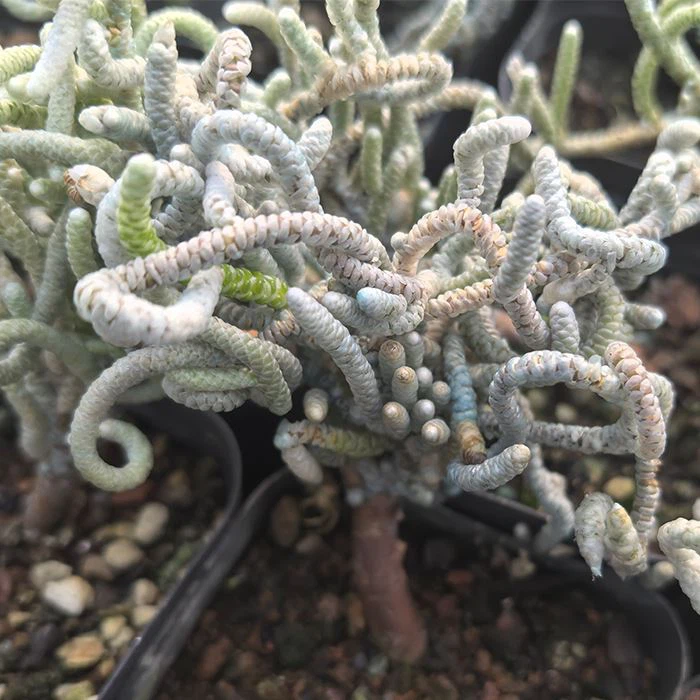

Avonia papyracea plant Features
Size: Avonia papyracea is a small, dwarf succulent, typically growing no more than 2–4 inches (5–10 cm) tall. Its growth form is compact and low to the ground, making it ideal for growing in small containers or rock gardens.
Stems: The most distinctive feature of *Avonia papyracea* is its thin, cylindrical stems, which are densely covered by white, papery scales (modified stipules). The actual leaves are tiny and hidden under these scales, which serve to protect the plant from the sun and reduce water loss by minimizing evaporation. The stems themselves are green, but the plant's white scales give it a ghostly, papery appearance.
Flowers: Avonia papyracea produces small, white or pinkish flowers that open briefly during the afternoon, often for just a few hours. The flowers are typically very small and not the primary attraction of the plant, though they are a delicate and subtle addition when in bloom.
Avonia papyracea plant Size:
- Potted in a 8-16 cm pot
-
The height of the plants and the flower pots can be made to your size.
Avonia papyracea plant Special Care or Planting instructions
- Light
Avonia papyracea* requires bright, indirect sunlight or partial sun. It is adapted to strong sunlight but may need some protection from the hottest part of the day in cultivation, especially in very sunny climates. In a greenhouse or windowsill, it thrives in bright conditions.
- Water
Water sparingly. During the growing season (spring and summer), water only when the soil is completely dry. During winter, when the plant is dormant, it needs very little to no water. Overwatering can lead to root rot, which is one of the main concerns in growing this species.
- Soil
This succulent needs well-draining soil, such as a cactus or succulent mix with added sand or pumice for extra drainage. It is sensitive to excess moisture, so it's essential that water does not accumulate around the roots.
- Temperature
Avonia papyracea* prefers warm, dry climates and is not frost-tolerant. It does well in temperatures between 65°F and 85°F (18°C to 29°C). If grown outdoors, it should be moved inside or protected from freezing temperatures during the winter.
- Propagation
Propagation is typically done by seed, as the plant does not readily produce offsets. Seeds can be sown in a well-draining substrate in warm temperatures. It can also be propagated through cuttings, but this is less common.
- Flowering
The flowers of *Avonia papyracea* are small and short-lived, opening briefly for a few hours during the afternoon. While they are not the main attraction of the plant, they can add to its charm when they appear.
- Pests and Diseases
This plant is generally pest-free, but it can occasionally suffer from mealybugs or fungal infections if grown in overly moist conditions. Maintaining proper airflow and keeping the plant dry can help prevent these issues.
Hot Tags: anacampseros papyracea, China anacampseros papyracea, Trichocereus Pachanoi Cristata Variegata, Fire Nandina Plant, Gymnocalycium Baldianum Cactus, Cactus Euphorbia Tirucalli, agave plant, Mammillaria Magnimamma Cristata


